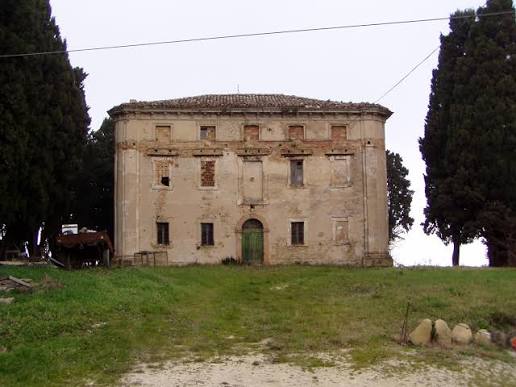
After eighteen years of plans and delays, the restoration of Villa Verdenelli in Staffolo is finally moving forward. The real challenge, however, will begin when the building work ends: turning a restored property into an active, professionally managed and financially sustainable destination
Eighteen years of plans, public resolutions, funding applications, delays and renewed attempts.
Villa Verdenelli, a historic property in Staffolo, in the Italian province of Ancona, is finally entering an operational phase. According to the Jesi–Fabriano edition of Corriere Adriatico, approximately €2 million has been secured for the restoration project, and the tender process is now being opened to interested contractors.
The villa is expected to become a centre for food and wine, professional education and regional promotion, featuring a wine cellar, a professional kitchen, meeting facilities, teaching spaces and accessible outdoor areas.
This is undoubtedly positive news for Staffolo and the surrounding area.
However, the Villa Verdenelli project also raises a much broader question—one that concerns hundreds of historic villas, former convents, schools, military barracks, palaces, villages and publicly owned buildings throughout Italy:
Physically restoring a property does not mean that the regeneration process has been completed.
Restoration returns a building to the community. Management must then transform it into a living operation capable of generating activity, revenue, employment, education and local economic development.
This is precisely where many projects encounter their greatest difficulties, even after substantial capital has been invested.
Villa Verdenelli’s Long Road to Restoration
The recent history of Villa Verdenelli illustrates just how complex the path towards the opening of a construction site can be.
The property was donated to the Municipality of Staffolo in 2002 by Pacifico Verdenelli, the last surviving heir of the family. In 2006, the Marche Region provided an initial grant intended to launch the restoration process.
The original plan was to create a facility connected to the Varnelli Hospitality School, offering post-diploma courses and advanced training in professional cooking, restaurant service, bar operations and hospitality management.
Preliminary and final restoration and safety plans were approved in 2008. Further structural requirements subsequently emerged, however, and the project entered a prolonged period of delay.
The process resumed in 2022 with a new feasibility study. The decisive breakthrough came in 2024, when the Italian Ministry of Culture allocated €2 million through its strategic programme for major cultural heritage projects.
Following approval of the final design, the tender process could begin. According to the timetable reported by the press, construction should take approximately one year from the award of the contract and the formal handover of the site.
The case demonstrates that, when historic properties are involved, the period between the original concept and its physical delivery can be exceptionally long.
Heritage restrictions, planning approvals, funding arrangements, design revisions and structural issues can significantly alter both the timetable and the total cost of an operation.
What the Project Will Include
Villa Verdenelli is expected to retain a predominantly educational and training-led purpose, closely connected to hospitality and food-and-wine activities.
The basement wine cellar will be restored and made available to the Villa Salvati Agricultural Institute in Monte Roberto, including for activities related to wine production and bottling.
The ground floor will accommodate reception areas and a room for meetings, presentations and events.
A professional kitchen will be created on the first floor for cooking demonstrations, training programmes, meetings and initiatives promoting local produce.
The attic will house the building’s technical systems, while the external areas will include accessible paths, landscaped spaces and educational gardens.
The project therefore has a clear regional and educational identity, bringing together hospitality, agriculture, wine, food, events and vocational training.
This range of possible uses is a major opportunity, but it also makes the definition of a clear governance and operating structure even more important.
A Food and Wine Centre Is Not Yet a Business Model
The expression “food and wine centre” describes a broad intended use. It does not, in itself, explain how the property will operate.
To turn the concept into a functioning organisation, several fundamental questions must be answered:
-
Who will be responsible for the day-to-day management of the property?
-
What activities will take place throughout the year?
-
Which organisations will be entitled to use the facilities?
-
Which services will be provided free of charge, and which will generate revenue?
-
Who will cover staffing, utilities and maintenance costs?
-
Will the property be managed directly by the municipality or entrusted to an external operator?
-
Will concessions, leases or partnerships with private operators be considered?
-
What minimum number of events, courses and activities will be required to keep the property operational?
-
How will the destination be marketed beyond its immediate local area?
-
Which performance indicators will be used to measure its economic, educational and social impact?
Without clear answers, there is a risk that Villa Verdenelli could become a beautifully restored and fully equipped property that is used only for occasional events.
The overall concept must therefore be translated into a detailed operating plan.
Restoration, Regeneration and Management Are Three Different Activities
Restoration concerns the physical conservation and rehabilitation of the building.
Regeneration concerns the ability to give the property a function that is consistent with the local area, market demand and the owner’s objectives.
Management concerns the daily organisation of activities, people, services, costs and revenues.
These three dimensions should be planned simultaneously.
A building may be restored to the highest architectural standards and still prove unsuitable for hospitality, catering or conference operations.
A professional kitchen, for example, must be designed according to the expected production volume, number of users, staff movements, storage requirements and delivery procedures.
A meeting room requires more than seating and audiovisual equipment. It also needs appropriate access, support facilities, connectivity, ventilation, climate control and a viable commercial proposition.
A wine cellar may serve an educational, production, tourism or commercial purpose. Each of these functions requires different permits, systems, professional skills and operating responsibilities.
For these reasons, the future user or operator should be involved before the design has been completely finalised.
Construction Funding Covers Only Part of the Investment
An investment of €2 million is substantial, but the cost of restoring the building does not necessarily correspond to the total amount required to make the property operational.
In addition to the construction work, a project of this kind may require funding for:
-
furniture and fittings;
-
professional kitchens and specialist equipment;
-
technology and audiovisual systems;
-
management software;
-
professional advice and permits;
-
recruitment and staff training;
-
launch marketing and communications;
-
insurance;
-
maintenance;
-
opening inventory and supplies;
-
working capital;
-
operating losses during the start-up period.
Even when some of the equipment is included within the construction contract, sufficient funding will still be required to operate the property after it opens.
A newly restored building has no established customer base, reputation, operating procedures or commercial relationships.
The time required to reach a satisfactory level of activity must therefore be incorporated into the feasibility study.
A Property’s Value Is Not Equal to the Amount Spent on It
Spending €2 million on restoring a building does not automatically increase its value by the same amount.
Value depends on the property’s ability to generate future benefits.
For a privately owned property, these benefits are generally measured through revenue, profitability, rental income and market value.
In the case of a publicly owned property, other outcomes may also be relevant:
-
services provided to the local community;
-
education and professional training;
-
job creation;
-
preservation of cultural heritage;
-
increased tourism appeal;
-
support for local businesses;
-
promotion of regional products;
-
the ability to generate new economic and social initiatives.
Even a project with primarily social, educational or cultural objectives needs a credible financial plan.
Where commercial income is insufficient to cover operating expenditure, any continuing public contribution should be calculated, planned and incorporated into a multi-year financial model.
Financial sustainability does not necessarily mean generating substantial profits. It means understanding in advance the costs, responsibilities, resources required and expected outcomes.
The Regeneration Dossier That Should Be Prepared Before Construction Begins
Before converting a historic villa, owners should prepare a comprehensive dossier integrating technical, economic, financial and operational considerations.
Technical and Planning Assessment
The analysis should verify permitted uses, heritage restrictions, usable floor area, accessibility, parking, safety requirements, building systems and the property’s realistic development potential.
The total gross floor area of a building is not necessarily the same as the space that can be used commercially.
Demand Analysis
The proposed use must be assessed against actual market demand.
For a food-and-wine destination, the analysis should consider the potential catchment area, tourism flows, demand for events, local agricultural and wine businesses, educational institutions, associations and prospective operating partners.
For a hospitality project, the assessment should examine occupancy, average rates, seasonality, competition, accessibility and target customer segments.
Concept Definition
The concept should explain what will actually happen inside the building.
General references to culture, tourism, food, wine or education are not sufficient. The plan must define the services to be offered, their frequency, target users and the spaces required to deliver them.
Capital Expenditure Plan
The investment plan should include every cost required to reach the opening stage, rather than focusing exclusively on restoration work.
Underestimating the total capital requirement can cause a project to stall just before completion.
Business Plan
The business plan should quantify revenue, operating costs, staffing requirements, maintenance expenditure, financing needs and expected results.
Its assumptions should be prudent and supported by market evidence, rather than based solely on the theoretical potential of the property.
Operating Model
The owner must decide whether to manage the destination directly or appoint a specialist operator.
The principal alternatives may include a concession, lease, business lease, direct operation, management agreement, public-private partnership or shared use by several organisations.
Pre-opening Plan
The work does not end when the construction site is handed back.
During the months preceding the opening, the project team must address recruitment, staff training, communications, commercial partnerships, the events calendar and booking or registration systems.
The analyses published by InvestimentiAlberghieri.it explore the relationship between property value, financial sustainability and the management of hospitality investments.
The Operator Should Be Involved Before Construction Ends
One of the most common mistakes is to begin looking for an operator only after the building work has been completed.
By that stage, most of the critical design decisions have already been made, and correcting operational shortcomings may be expensive or impractical.
An experienced operator can provide valuable input at an earlier stage by helping to:
-
define the allocation and layout of spaces;
-
design operational flows;
-
select appropriate equipment;
-
estimate management costs;
-
identify commercially viable services;
-
develop the sales strategy;
-
plan staffing requirements;
-
assess the property’s actual operating capacity.
Property development expertise should therefore be combined with operational knowledge.
The analyses and professional guides available on RobertoNecci.it examine the role of management, organisation and financial planning within hospitality and tourism businesses.
InvestHotel.it focuses on real estate opportunities, transactions and development processes within the hospitality sector.
The Risk of Creating Perfect but Underused Buildings
Italy has no shortage of properties that have been restored with substantial public or private funding but struggle to establish continuous activity after their official opening.
The problem frequently begins with an incorrect sequence:
-
funding becomes available;
-
the construction work is designed;
-
the building is restored;
-
only then does the owner ask who will manage it.
The sequence should be different.
Before the design is finalised, the property, demand, operating model and financial sustainability should all be addressed together.
An empty building generates costs.
A professionally managed destination generates activity, relationships, employment and long-term value.
Why Villa Verdenelli Could Become a Replicable Model
Villa Verdenelli has several characteristics that could support the project’s success.
Its relationships with educational institutions could provide regular use rather than occasional activity. The connection between hospitality training, agriculture, wine and cuisine creates a distinctive and recognisable identity. The variety of available spaces could support education, meetings, tastings, events and other regional initiatives.
The villa could therefore become a working laboratory in which professional education and local economic development reinforce one another.
Achieving this outcome will require effective coordination between:
-
the municipality;
-
educational institutions;
-
local associations;
-
businesses;
-
agricultural and wine producers;
-
tourism operators;
-
the organisations responsible for management;
-
commercial and financial partners.
The quality of the governance structure will be just as important as the quality of the restoration work.
The Real Lesson of Villa Verdenelli
The Staffolo project offers a valuable lesson for property owners, public authorities and investors.
Time spent defining the operating model does not delay a project. On the contrary, it reduces the risk of design mistakes, expensive alterations and long-term underuse.
Before restoring a villa, former convent, school, military building or publicly owned property, decision-makers should establish:
-
which use can generate the greatest value;
-
whether genuine demand exists;
-
how much capital will be required;
-
which operating costs will arise after opening;
-
who will manage the property;
-
which revenue assumptions are realistic;
-
which contractual structure should be adopted;
-
how long it may take to reach financial stability;
-
which risks will remain with the owner.
Restoration is an essential step.
However, the ultimate objective should not simply be to return a refurbished building to the community. It should be to create a property that remains active, relevant and sustainable over time.
Do You Own a Historic Villa, Former Convent or Property Requiring Conversion?
Before commissioning the construction work, applying for funding or searching for an operator, the overall feasibility of the project should be assessed.
Hotel Management Group supports property owners, public authorities, investors, businesses and financial stakeholders in the development and regeneration of assets intended for hospitality, food and beverage, professional education, events and tourism.
Its advisory services may include:
-
preliminary property assessment;
-
feasibility studies;
-
concept development;
-
economic and financial evaluation;
-
business planning;
-
selection of the most appropriate use;
-
definition of the operating model;
-
identification of operators and strategic partners;
-
support with hospitality and tourism conversions;
-
investment risk assessment.
Do not invest in construction before understanding how the property will operate after opening.
To submit a project for preliminary consideration, send a presentation of the property, photographs, floor plans, planning information and the objectives of the proposed investment to: