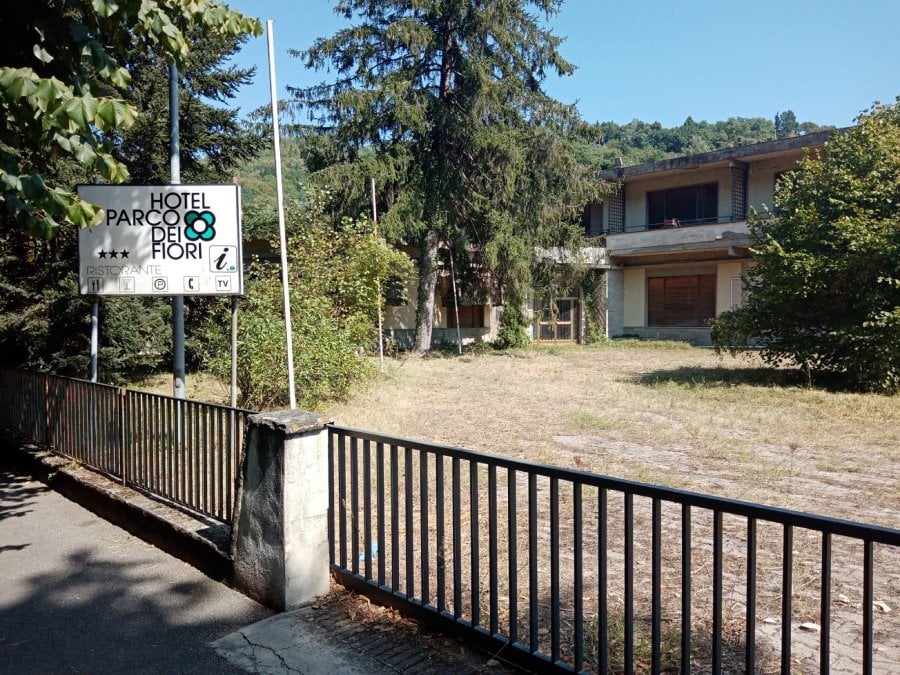
Just a short walk from the beach in Viserba di Rimini, a property classified under cadastral category D/2 and historically intended for hospitality use is coming to auction with a base price of €313,200 and a minimum admissible bid of €234,900. The appraisal, however, describes a far less straightforward situation: 10 small self-contained units with living rooms and kitchens, an entire residential floor excluded from the sale, shared common areas, maintenance issues and a complex planning history that requires careful verification of exactly which hospitality activity can legally be operated. In this case, the real underwriting challenge is not simply CAPEX and EBITDA: the first question is what economic and operating right the investor is actually acquiring.
Sometimes the most important aspect of a hotel auction is not the price.
It is the nature of the asset itself.
That is precisely the case with the property at 2 Viale Anita Garibaldi, Viserba di Rimini, being sold as part of Real Estate Enforcement Proceeding No. 42/2025 before the Court of Rimini.
The key figures are:
-
Base price: €313,200
-
Minimum admissible bid: €234,900
-
Minimum bid increment: €5,000
-
Bid submission deadline: 21 September 2026 at 1:00 p.m.
-
Auction: 22 September 2026 at 11:00 a.m.
-
Sale method: asynchronous online auction
-
Lot: single lot
-
Proceeding: RGE 42/2025 – Court of Rimini
The sale documentation indicates an area of approximately 462.40 sqm, while the expert appraisal calculates a gross floor area for the relevant property of approximately 499.41 sqm.
At first glance, this might appear to be a conventional hospitality investment opportunity on the Adriatic Riviera.
It is not.
A Strong Location: Close to the Beach and Within a Genuine Tourism Market
Location is unquestionably one of the property’s main strengths.
The asset is situated a short distance from Viserba’s seafront, in a predominantly tourism and residential area with substantial seasonal demand.
And the underlying destination is anything but marginal.
Rimini and the wider Riviera Romagnola benefit from a broad and diversified demand base driven not only by summer leisure tourism, but also by:
-
Rimini Fiera;
-
conferences;
-
major events;
-
sports;
-
leisure travel;
-
family tourism;
-
weekend breaks;
-
business travel.
This distinction matters.
The issue is not whether demand exists in Rimini.
The issue is whether this specific property can be transformed into a product capable of capturing that demand profitably.
These Are Not 10 Conventional Hotel Rooms: They Are 10 Small Self-Contained Units
The appraisal does not describe a traditional hotel composed of standard guestrooms with bathrooms.
Instead, it identifies:
10 small self-contained accommodation units
featuring:
-
sleeping areas;
-
bathrooms;
-
living rooms;
-
kitchens;
-
a significant degree of independent utility provision.
The layout is broadly described as follows.
Ground floor
-
2 small accommodation units;
-
lobby/entrance area;
-
sanitary facilities;
-
ancillary rooms.
First floor
-
4 units;
-
living room with kitchen;
-
bedroom;
-
bathroom;
-
in some cases a balcony.
Second floor
-
a further 4 units with a similar layout.
This configuration fundamentally changes the potential business model.
From a physical-product perspective, the property appears much closer to:
serviced apartments / aparthotel / residence
than to a conventional hotel.
But commercial logic alone is not enough.
Before this observation can become an investment thesis, a much more fundamental issue must be resolved.
D/2 Does Not Automatically Mean “A Hotel That Can Reopen”
This is the central point of the transaction.
In situations of this kind, at least three separate layers need to be distinguished.
1. Cadastral Classification
The property is classified as D/2, the Italian cadastral category generally associated with hotels and guesthouses.
However, cadastral classification primarily serves fiscal and property-identification purposes.
2. Planning Status and Building Compliance
The investor must determine what is actually permitted under:
-
building permits;
-
planning instruments;
-
the legally compliant configuration of the property;
-
any regularisation procedures;
-
the authorised use under planning law;
-
the current physical layout.
3. The Right to Operate a Hospitality Business
Even where a property is compatible with hospitality use from a planning perspective, this does not automatically mean that a particular hotel or accommodation business can immediately begin operating.
The investor must verify:
-
regional hospitality requirements;
-
applicable accommodation classification;
-
minimum size requirements;
-
common-area requirements;
-
mandatory services;
-
safety compliance;
-
fire prevention;
-
accessibility;
-
SCIA or other operating filings and authorisations;
-
occupancy certification and other administrative prerequisites.
This distinction is fundamental.
Cadastral classification, permitted planning use and the legal ability to operate a hospitality business are not the same thing.
That is arguably the core underwriting issue in this transaction.
The Property’s Planning History Makes This Verification Even More Important
The appraisal reconstructs a planning and building history that is far from straightforward.
Previous inspections identified modifications and alterations that differed from the approved plans.
Among the issues referred to were reductions in certain common areas and the residential use of some spaces.
According to administrative documentation cited in the appraisal, these changes had affected the property’s compliance with certain requirements applicable to a residenza turistico-alberghiera, broadly comparable to a serviced residence or residential hotel.
This is critical.
Before submitting a bid, an investor therefore needs to determine:
-
the property’s current legally compliant configuration;
-
which non-compliances remain outstanding;
-
which issues can be regularised;
-
which physical works may be required;
-
which specific hospitality format can legally be authorised;
-
whether the current apartment-style layout can be retained;
-
whether common areas need to be reinstated.
In a hospitality special situation:
legal feasibility comes before the business plan.
An Entire Floor of the Building Is Not Included in the Sale
There is another material real estate complication.
The building extends across several levels, but the third floor comprises a separate residential unit that is not included in the auction.
The investor will therefore not acquire the entire building.
They will acquire the portion included in the enforcement proceedings, while another part of the building remains under third-party ownership.
This inevitably creates shared common areas.
Before acquisition, an investor needs to verify:
-
access rights;
-
staircases;
-
lift use;
-
courtyard areas;
-
shared building systems;
-
rights and easements;
-
allocation of common expenses;
-
condominium rules;
-
maintenance responsibilities;
-
potential interference between the hospitality operation and the residential owner.
This illustrates a principle that is frequently underestimated:
Asset Complexity > Acquisition Price
A property can appear inexpensive but become operationally challenging if its legal and condominium structure constrains the business.
€234,900 Equates to Approximately €23,500 per Unit
Based on the 10 units identified in the appraisal:
€313,200 / 10 = €31,320 per unit
The minimum admissible bid equates to:
€234,900 / 10 = €23,490 per unit
The expert appraisal itself reviewed comparable hotel properties in the area and adopted an average reference value of approximately:
€31,500 per room/unit
The valuation therefore started from:
10 × €31,500 = €315,000
to which the value of certain ancillary areas was added.
The gross assessed value before adjustments was approximately:
€348,000
A 10% reduction was subsequently applied, resulting in:
€313,200
which corresponds to the current base price.
This means that the transaction is fundamentally different from the deeply discounted opportunities previously analysed in Chianciano Terme.
There Is No 90% Price Collapse Here
There is no enormous historical repricing creating an automatic cushion for future CAPEX.
The base price essentially reflects the adjusted expert valuation.
This means that value creation cannot primarily come from a deep entry discount.
It must instead come from:
legal normalization
technical turnaround
the right operating model
commercial performance
This may make the special situation less dramatic from a pricing perspective, but considerably more sophisticated from an execution standpoint.
The Property Still Requires CAPEX
The appraisal describes the overall maintenance condition as fair-to-poor.
Among the issues identified are:
-
water infiltration from the roof terrace;
-
deterioration affecting parts of the roof structure;
-
rising damp at ground-floor level;
-
deterioration of external render and paintwork;
-
dated finishes;
-
building systems that are not up to modern standards;
-
the need for maintenance and refurbishment works.
This is therefore not simply a:
buy-and-operate
transaction.
A technical investment plan is required.
And with only 10 units, every euro of CAPEX has a significant impact.
The Real Economic Constraint May Be Scale
This brings us to the second major underwriting issue.
A traditional 10-room hotel or accommodation property still carries a number of unavoidable fixed costs:
-
reception;
-
administration;
-
revenue management;
-
distribution;
-
housekeeping;
-
maintenance;
-
software;
-
utilities;
-
insurance;
-
compliance;
-
marketing.
Across 50 or 100 rooms, those costs can be spread efficiently.
Across 10 units, much less so.
The real risk may therefore not simply be refurbishment cost.
It may be the operating model itself.
Traditional Hotel or Serviced Apartments?
The physical configuration suggests a compelling alternative.
Each unit already provides:
-
bedroom;
-
bathroom;
-
living area;
-
kitchen;
-
significant functional independence.
Subject to planning and regulatory feasibility, this may make the asset more suitable for:
serviced apartments
or:
aparthotel / residence
The economic implications could be significant.
A serviced-apartment model may allow for:
-
lower staffing intensity;
-
longer average stays;
-
less frequent housekeeping;
-
reduced dependence on F&B;
-
stronger appeal to families;
-
trade-fair visitors;
-
extended-stay guests;
-
workation demand;
-
off-season stays.
The property may therefore function more effectively as:
low fixed-cost hospitality
rather than as a small full-service hotel.
But the sequence matters.
First comes regulatory feasibility.
Then comes the concept.
Three Potential Investment Theses
Scenario 1 — Micro Hotel
Re-establish a conventional hotel operation and use the 10 units as rooms or suites.
Advantages
-
proximity to the beach;
-
potential appeal for families;
-
potential boutique positioning.
Challenges
-
very limited scale;
-
high fixed-cost absorption per unit;
-
hospitality requirements need to be reconfirmed;
-
potential inefficiency as a standalone operation.
This is probably the most challenging scenario from an operating perspective.
Scenario 2 — Aparthotel / Serviced Apartments
Use the existing apartment-style configuration as a strength.
Potential target customers could include:
-
families;
-
weekly leisure guests;
-
small groups;
-
trade-fair visitors;
-
extended-stay customers;
-
workation guests.
The objective would be to:
increase length of stay and reduce cost-to-serve.
With only 10 units, this may be a far more efficient configuration.
Scenario 3 — Boutique Apartments Within a Multi-Property Platform
This may be the most compelling strategy.
The 10 units could be incorporated into a wider operating platform sharing:
-
reception;
-
revenue management;
-
reservations;
-
marketing;
-
administration;
-
maintenance;
-
sales.
The property would no longer be viewed as:
a standalone 10-room hotel
but as:
10 additional keys within a larger operating platform.
The economics are completely different.
This is precisely the type of operating architecture that HotelManagementGroup.it can assess in hotel-management, aggregation and turnaround situations.
Parking Availability Could Influence the Positioning
Parking availability appears limited, while part of the external space falls within the building’s shared common areas.
In a seaside destination, this matters.
If the primary target were:
-
families;
-
longer-stay leisure guests;
-
customers arriving by car;
parking availability could materially affect perceived value and achievable ADR.
Once again:
define the customer first.
Then define the product.
Actual Possession of the Property Must Also Be Verified
The appraisal also reports that, at the time of inspection, the property was occupied by third parties under a registered loan-for-use agreement.
This must be verified against the most recent court documentation.
Before bidding, an investor should determine:
-
current occupancy status;
-
whether the contractual arrangement is enforceable against the purchaser;
-
any timeline for obtaining vacant possession;
-
access rights;
-
implications for the construction timetable.
Because any delay in gaining effective control of the property immediately creates:
higher financing costs
delayed CAPEX execution
delayed opening
lower IRR.
Time is capital.
Hospitality Special Situations Also Carry “Legal & Regulatory CAPEX”
Traditional hotel CAPEX normally refers to:
-
guestrooms;
-
building services;
-
FF&E;
-
façades;
-
bathrooms;
-
public areas.
But complex special situations carry another layer of investment.
We can describe it as:
Legal & Regulatory CAPEX
Not necessarily as a standalone accounting category, but as the combined impact of:
-
professional advisory costs;
-
design work;
-
regularisation procedures;
-
administrative filings;
-
time;
-
compliance upgrades;
-
regulatory uncertainty;
-
financing costs generated by delays.
In the Viserba case, this component may prove decisive.
At Investhotel.it, distressed transactions are analysed on the principle that:
resolving complexity is itself part of value creation.
A Potential Underwriting Framework
Consider three purely illustrative scenarios:
| Scenario | Total Investment Cost | 10 Units | Cost per Unit |
|---|---|---|---|
| Light Turnaround | €500,000 | 10 | €50,000 |
| Repositioning | €800,000 | 10 | €80,000 |
| Deep Repositioning | €1,100,000 | 10 | €110,000 |
These are not estimates of the actual project cost.
They illustrate the economics.
With only 10 units:
every additional €100,000 of investment equals €10,000 per key.
CAPEX discipline is therefore critical.
Now assume each unit generates annual accommodation revenue of:
€25,000
Total revenue would be:
€250,000
At €35,000 per unit:
€350,000
At €45,000:
€450,000
From this, the operator must still deduct:
-
distribution costs;
-
housekeeping;
-
utilities;
-
maintenance;
-
staffing;
-
marketing;
-
administration;
-
fixed overheads.
The real question becomes:
what stabilized EBITDA can a property of this scale realistically generate?
The answer determines the Maximum Sustainable CAPEX.
€234,900 Is Not Necessarily Cheap
This needs to be stated clearly.
€234,900 for 10 units close to the beach in Rimini may appear highly attractive.
But the price cannot be described as cheap without first understanding:
-
legal feasibility;
-
planning compliance;
-
CAPEX;
-
regularisation costs;
-
possession timetable;
-
operating model;
-
stabilized EBITDA.
An apparently inexpensive property can become expensive if too much capital and too much time are required to make it investable.
At the same time, the combination of:
location
10 units already configured as small apartments
relatively low entry price
a lean operating model
could create an attractive investment proposition.
That is the difference between:
buying a property
and:
engineering an investment.
The Seven Essential Due Diligence Workstreams
1. Legal Due Diligence
Proceedings, occupancy, loan-for-use agreement, common areas, rights and the relationship with the separate residential owner.
2. Planning & Regulatory Due Diligence
Cadastral classification, permitted use, building compliance, occupancy certification and the specific hospitality activity that can legally be operated.
3. Technical Due Diligence
Roof, water infiltration, damp, façades, building systems, lift and CAPEX.
4. Hospitality Feasibility
Hotel, RTA, aparthotel, residence or serviced apartments: which model is both legally feasible and commercially optimal?
5. Market Study
ADR, occupancy, seasonality, seaside demand, trade fairs, events, family travel and extended stay.
6. Financial Underwriting
Total Investment Cost, Maximum Sustainable CAPEX, EBITDA, break-even, IRR and Stabilized Value.
7. Operating Model
Standalone property or integration into a multi-property operating platform.
It is precisely through this last workstream that limited scale could potentially be transformed from a weakness into an advantage.
Conclusions
The Viserba case is very different from a conventional hotel auction.
The headline figures are:
10 small accommodation units
approximately 500 sqm gross area according to the appraisal
a short distance from the beach
D/2 cadastral classification
€313,200 base price
€234,900 minimum admissible bid
auction on 22 September 2026
But behind these figures lies a far more complex structure.
One residential floor is excluded from the sale.
There are shared common areas.
Planning and maintenance issues have been identified.
The physical configuration resembles small apartments more than conventional hotel rooms.
Most importantly, the investor must establish precisely:
which hospitality activity can currently be operated from a planning, technical and administrative perspective.
The question is therefore not:
“Is it worth buying a hotel near the beach for €234,900?”
The correct question is:
“What economic and operating right am I actually acquiring for €234,900?”
If the answer is:
10 fully compliant serviced apartments + controlled CAPEX + a lean cost structure + leisure and trade-fair demand + centralized management
the transaction could make considerable sense.
If, by contrast, the investment requires:
complex regularisation + substantial CAPEX + lengthy administrative procedures + fixed costs incompatible with only 10 units
the apparently low acquisition price could lose its appeal very quickly.
That is the real lesson of the transaction.
In hospitality special situations, buying well is not enough.
The investor must know exactly what economic right is being acquired — and whether that right can be converted into EBITDA.
Because the greatest risk in this transaction may not be overpaying for the property.
It may be paying for an economic right that has not yet been verified as capable of being exercised in the form assumed by the business plan.
InvestimentiAlberghieri.it monitors and analyses hotel auctions, distressed assets and hospitality investment opportunities; Investhotel.it focuses on extraordinary transactions, turnarounds and special situations; RobertoNecci.itaddresses hotel valuation, strategy and governance; while HotelManagementGroup.it focuses on hotel management, repositioning and operational performance.
Are You Assessing a Hotel Auction or a Hospitality Special Situation?
In distressed transactions, acquisition price is only one variable.
Before submitting a bid, investors need to determine:
Legal Feasibility, Total Investment Cost, Maximum Sustainable CAPEX, Operating Model, Stabilized EBITDA and Stabilized Value.
For preliminary investment analysis, hotel valuations and due diligence:
info@investimentialberghieri.it