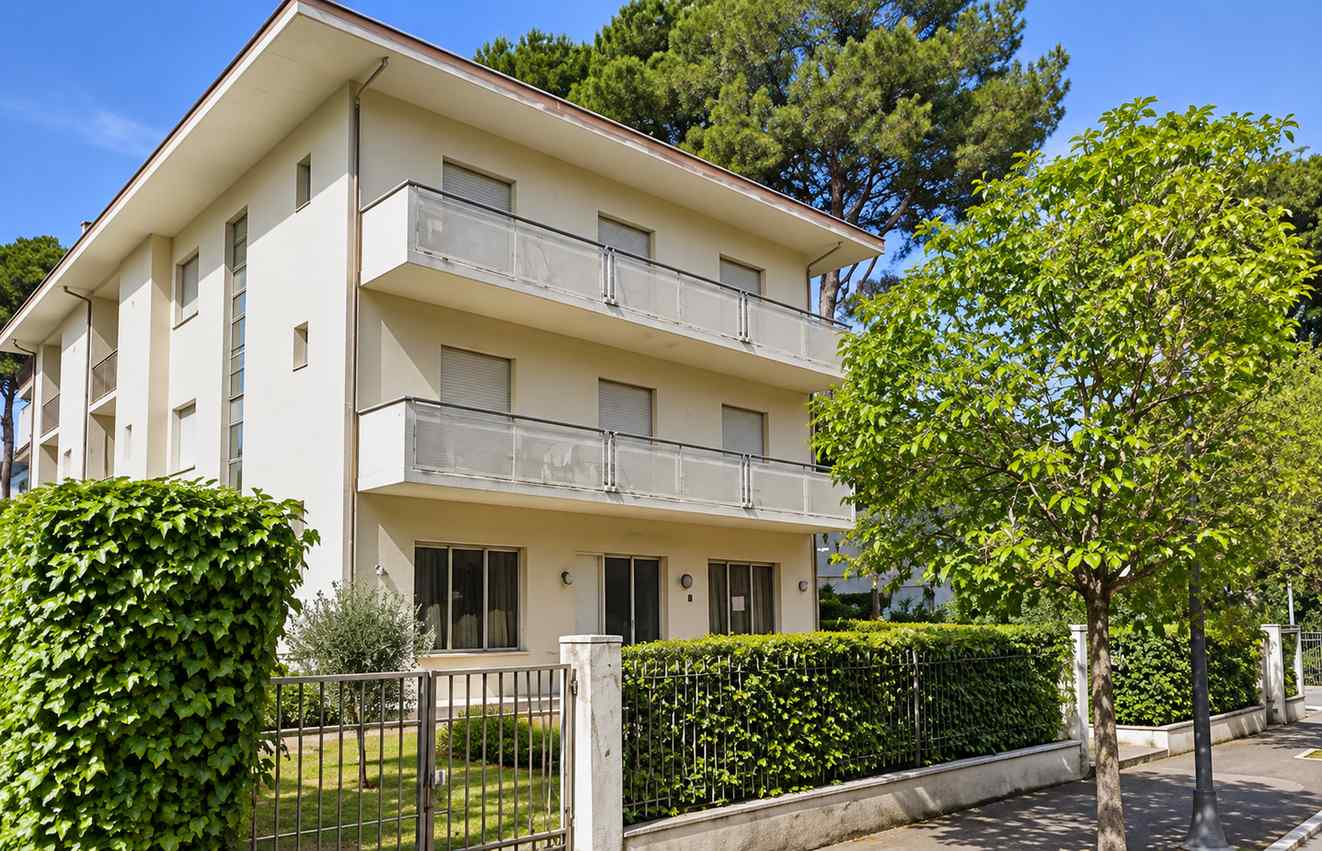
The demolition of the former Hotel Belsoggiorno in Riccione is more than an urban redevelopment story: it is a case study in real estate value, business value, CAPEX, profitability and opportunity cost in the independent hotel sector
A hotel can have significant value as a property while having insufficient value as an operating business.
It may benefit from a strong location, a long history and a recognisable identity, yet still be unable to justify the capital required to remain competitive.
This is the key issue raised by the former Hotel Belsoggiorno in Riccione, a disused property scheduled for demolition to make way for a new residential development.
At first sight, this may appear to be simply another hotel exiting the market.
In reality, it raises a much broader question:
when does the alternative-use value of a property exceed the value of the hotel business operating within it?
This is likely to become increasingly relevant across the Adriatic Riviera and, more broadly, in many Italian destinations characterised by a high concentration of small independent hotels.
To understand why, four concepts must be clearly distinguished:
real estate value, business value, post-CAPEX value and alternative-use value.
The core issue: a hotel is not worth the sum of its square metres
The Italian hotel market still has a tendency to assess hospitality assets primarily through a real estate lens.
Price per square metre.
Price per room.
Land value.
Location.
Sea views.
Distance from the beach.
All of these factors matter.
But they are not enough.
A hotel is simultaneously:
-
a property;
-
an operating business;
-
a cash-flow-generating asset;
-
an investment;
-
a business that requires continuous capital expenditure.
Its value therefore cannot be determined solely by looking at the building.
A professional investor starts from a much simpler question:
how much income can this capital generate?
This is the approach adopted in the analysis published by InvestimentiAlberghieri.it, where property value, operating sustainability, future performance and required investment are assessed together.
The four dimensions of hotel value
When assessing a small hotel, it is useful to separate at least four distinct layers of value.
1. Real Estate Value
This is the value of the property in its current configuration.
It depends on:
-
location;
-
floor area;
-
building characteristics;
-
condition;
-
planning and zoning regulations;
-
development potential;
-
local market liquidity.
2. Business Value
This is the value of the hotel operating company.
It depends on its ability to generate income through:
-
ADR;
-
occupancy;
-
RevPAR;
-
ancillary revenues;
-
GOP;
-
EBITDA;
-
cost structure;
-
commercial strength;
-
reputation;
-
management capability.
3. Post-CAPEX Value
This is the value of the hotel after the investment required to make it competitive again.
This is often where the economics of the transaction change completely.
4. Alternative-Use Value
This is the value the asset may achieve under a different use, such as:
-
residential;
-
serviced apartments;
-
student housing;
-
senior living;
-
mixed use;
-
any other use permitted under local planning rules.
When alternative-use value materially exceeds hotel investment value, conversion can become the economically rational choice.
The formula investors should be using
In highly simplified terms:
Economic Investment Value = Present Value of Future Cash Flows − Required CAPEX − Risk − Cost of Capital
Or, simplifying even further:
Investment Value = Sustainable EBITDA × Multiple − CAPEX − Net Financial Debt
The point is straightforward.
A hotel is not worth more simply because it generates high revenue.
Its value depends on how much cash remains after all the costs required to generate that revenue.
The structural challenge facing small coastal hotels
Many coastal hotels in Italy share similar characteristics:
-
20 to 40 rooms;
-
buildings developed several decades ago;
-
relatively small guestrooms;
-
limited common areas;
-
high seasonality;
-
family ownership;
-
independent management;
-
deferred investment;
-
limited access to capital.
For decades, this model was one of the foundations of Italian tourism.
But the competitive environment has changed dramatically.
Today, customers can compare in seconds:
-
price;
-
reviews;
-
photographs;
-
room quality;
-
services;
-
location;
-
reputation.
Online travel agencies have increased price transparency.
Online reviews have made product weaknesses immediately visible.
New hotels enter the market with:
-
larger rooms;
-
more efficient systems;
-
contemporary design;
-
digital infrastructure;
-
more sophisticated distribution;
-
professional revenue management.
The consequence is clear:
the cost of remaining competitive is rising faster than many small hotels can generate the capital required to fund it.
CAPEX has become a key barrier to competitiveness
Consider a hypothetical 30-room hotel.
The property requires:
-
guestroom refurbishment;
-
bathroom renovation;
-
new building systems;
-
air conditioning;
-
new windows;
-
energy-efficiency upgrades;
-
lift upgrades;
-
façade works;
-
refurbishment of common areas;
-
fire-safety compliance;
-
digital systems;
-
new furniture and fixtures.
Assume an average CAPEX requirement of:
€40,000 per room
30 rooms × €40,000 =
€1,200,000
On top of this, an investor may also need to fund:
-
design and engineering;
-
permits and fees;
-
financing costs;
-
acquisition costs;
-
pre-opening;
-
marketing;
-
working capital.
The total investment can therefore quickly exceed €1.5 million before even considering the purchase price of the property.
Return on capital comes before refurbishment
Now assume the hotel is acquired for:
€1,500,000
CAPEX:
€1,200,000
Initial investment:
€2,700,000
Once professional fees, financing costs and pre-opening expenses are added, the total investment can easily approach:
€3 million
If, after refurbishment, the hotel generates EBITDA of:
€180,000
the operating return on invested capital would be approximately:
6%
And this is before considering:
-
taxation;
-
debt service;
-
future maintenance;
-
investment risk;
-
seasonality;
-
market cyclicality.
This is why the correct question is not:
how much will the refurbishment cost?
The correct question is:
how much value will the capital invested in the refurbishment create?
CAPEX can create value. It can also destroy it.
Imagine two identical hotels.
Both invest:
€1 million.
The first increases annual EBITDA by:
€300,000.
The second increases EBITDA by only:
€70,000.
In the first case, CAPEX creates value.
In the second, the economic return may be inadequate.
A refurbishment should therefore not be assessed as an aesthetic project.
It should be assessed as an investment.
At least five indicators matter:
-
increase in ADR;
-
increase in occupancy;
-
increase in annual opening days;
-
increase in EBITDA;
-
increase in asset value.
If these five metrics do not improve materially, CAPEX risks becoming little more than extraordinary maintenance.
How much is a small hotel business really worth?
Assume a hotel generates:
Normalised EBITDA: €200,000
For illustration purposes, assume a valuation multiple of:
8x EBITDA
Theoretical enterprise value:
€1,600,000
Now assume the investor must fund:
€1,000,000 of CAPEX.
The investment case changes materially.
The investor cannot simply think in terms of a €1.6 million value.
The analysis must incorporate:
-
CAPEX;
-
financial debt;
-
transaction costs;
-
risk;
-
working capital.
This is one of the main reasons why the expectations of sellers and buyers can diverge so significantly.
The owner tends to look at:
the building and the revenue.
The investor looks at:
the future return on capital.
Revenue is vanity, EBITDA is sanity, cash flow is reality
A hotel can generate significant revenue and still create very little value.
Consider two properties.
Hotel A
Revenue:
€2,000,000
EBITDA margin:
8%
EBITDA:
€160,000
Hotel B
Revenue:
€1,500,000
EBITDA margin:
25%
EBITDA:
€375,000
Hotel B generates less revenue.
But it may be worth substantially more.
Because revenue alone does not determine value.
The ability to generate profit does.
Small hotels and the challenge of scale
A 25-room hotel still has to fund:
-
management;
-
administration;
-
marketing;
-
reservations;
-
software;
-
revenue management;
-
maintenance;
-
staffing;
-
professional advice.
Yet those costs are spread over a relatively small room inventory.
A 250- or 500-room hotel platform can spread many central overheads across a much larger base.
This creates significant economies of scale.
That is one of the reasons why the following models may become increasingly relevant:
-
hotel aggregation;
-
management contracts;
-
cluster management;
-
multi-property platforms;
-
centralised services.
HotelManagementGroup.it operates in the area of hotel management and performance improvement.
InvestHotel.it focuses on investment, repositioning and asset enhancement.
RobertoNecci.it explores hotel governance, management control and strategy.
The fifth dimension: potential value
A hotel with weak profitability today is not necessarily a poor investment.
It may still have significant potential value.
The key question is:
what could it become?
Repositioning may allow the hotel to:
-
move upmarket;
-
reduce the room count while increasing room size and quality;
-
create suites;
-
introduce wellness;
-
develop F&B;
-
increase ADR;
-
extend the operating season;
-
attract international demand;
-
increase direct bookings;
-
reduce dependence on OTAs;
-
improve revenue management.
This is where marketing, positioning and distribution become part of the financial analysis.
HotelMarketingLab.it focuses specifically on the relationship between hotel marketing, revenue management, artificial intelligence, direct booking and profitability.
Because refurbishing without commercially repositioning the hotel creates a clear risk:
investing capital to sell a better product at the same price as before.
The decision matrix: refurbish, sell or convert?
Before making a strategic decision, at least four scenarios should be modelled.
| Scenario | CAPEX | Potential EBITDA | Value Creation | Risk |
|---|---|---|---|---|
| Current operation | Low | Low/Medium | Limited | Medium |
| Refurbishment | Medium/High | Medium | Medium | Medium |
| Deep repositioning | High | Medium/High | High | High |
| Conversion | Variable | Non-hotel | Potentially High | Planning/Execution |
The correct decision depends on the relationship between:
capital required and value created.
When does refurbishment make sense?
A refurbishment is economically justified when:
-
the destination is growing;
-
achievable ADR is materially higher than current ADR;
-
occupancy can increase;
-
the operating season can be extended;
-
CAPEX generates meaningful incremental EBITDA;
-
post-investment value exceeds the overall cost of capital.
In simple terms:
refurbishment makes sense when every euro invested creates more than one euro of additional value.
When does selling make sense?
A sale may be rational when:
-
the hotel generates limited margins;
-
the owner is unwilling or unable to fund new CAPEX;
-
the asset requires different management capabilities;
-
a professional investor can unlock economies of scale;
-
market value exceeds the current value of the operating business.
Selling does not necessarily mean abandoning value.
It may mean transferring the asset to an owner better equipped to unlock it.
When does conversion make sense?
Conversion becomes compelling when:
Alternative-Use Value > Hotel Investment Value
In other words, when the value created through another permitted use exceeds the value the asset can generate as a hotel.
This is precisely the type of logic that the former Belsoggiorno case brings into focus.
The question is not whether the hotel is aesthetically attractive or not.
The question is which use of capital creates the greatest economic value.
From emotional value to investment value
Many small Italian hotels carry enormous emotional value.
They are family businesses.
They were built by parents or grandparents.
They have accompanied the development of their destinations for decades.
That heritage has real value.
But it does not necessarily equal investment value.
An investor looks at:
-
cash flow;
-
risk;
-
CAPEX;
-
leverage;
-
expected return;
-
exit value.
Financial markets do not reward history alone.
They reward the future ability to generate cash.
The Riccione case may be a sign of what comes next
The former Hotel Belsoggiorno can therefore be seen as one example of a much broader process.
Over the next few years, part of Italy’s hotel stock may follow very different paths:
-
some hotels will be refurbished;
-
others will be repositioned;
-
some will be aggregated;
-
some will move into the hands of professional operators;
-
others will permanently exit the hotel market.
This does not necessarily mean that the hospitality sector is becoming weaker.
In some cases, the opposite may be true.
The reduction of marginal hotel stock can potentially support:
-
higher occupancy for the hotels that remain;
-
stronger ADR;
-
greater investment capacity;
-
higher average product quality;
-
improved profitability.
In other words:
fewer rooms do not necessarily mean less tourism.
They may mean a more efficient hotel industry.
The decisive question for owners and investors
Before buying, selling or refurbishing a hotel, one question should be answered first:
where is the greatest value created?
In the current operation?
In refurbishment?
In repositioning?
In aggregation?
In a sale?
In conversion?
The answer should not be emotional.
It should be driven by:
data + business plan + CAPEX + cash flow + alternative scenarios.
The real value of a hotel
Ultimately, hotel value can be expressed through a simple relationship:
Purchase Price
-
CAPEX
-
Working Capital
-
Financing Costs
= Invested Capital
This capital must then be compared with:
EBITDA
-
Cash Flow
-
Growth
-
Exit Value
If the expected return is adequate, the investment creates value.
If it is not, the strategy needs to change.
That is the difference between a hotel investment and a purely real estate transaction.
Hotel business and asset valuation
InvestimentiAlberghieri.it develops independent analysis for:
-
hotel owners;
-
investors;
-
family offices;
-
operators;
-
banks;
-
funds;
-
advisors;
-
parties evaluating acquisitions or asset enhancement opportunities.
The analysis may include:
-
business valuation;
-
GOP analysis;
-
normalised EBITDA;
-
property valuation;
-
market analysis;
-
competitive benchmarking;
-
CAPEX assessment;
-
repositioning analysis;
-
business planning;
-
financial sustainability;
-
alternative scenarios;
-
potential value assessment;
-
turnaround analysis;
-
strategic transaction support.
The objective is not simply to determine:
how much a hotel costs.
It is to understand:
how much it can truly be worth and how much capital it is rational to invest.
For further information and analysis:
info@investimentialberghieri.it
InvestimentiAlberghieri.it
InvestHotel.it
RobertoNecci.it
HotelManagementGroup.it
HotelMarketingLab.it