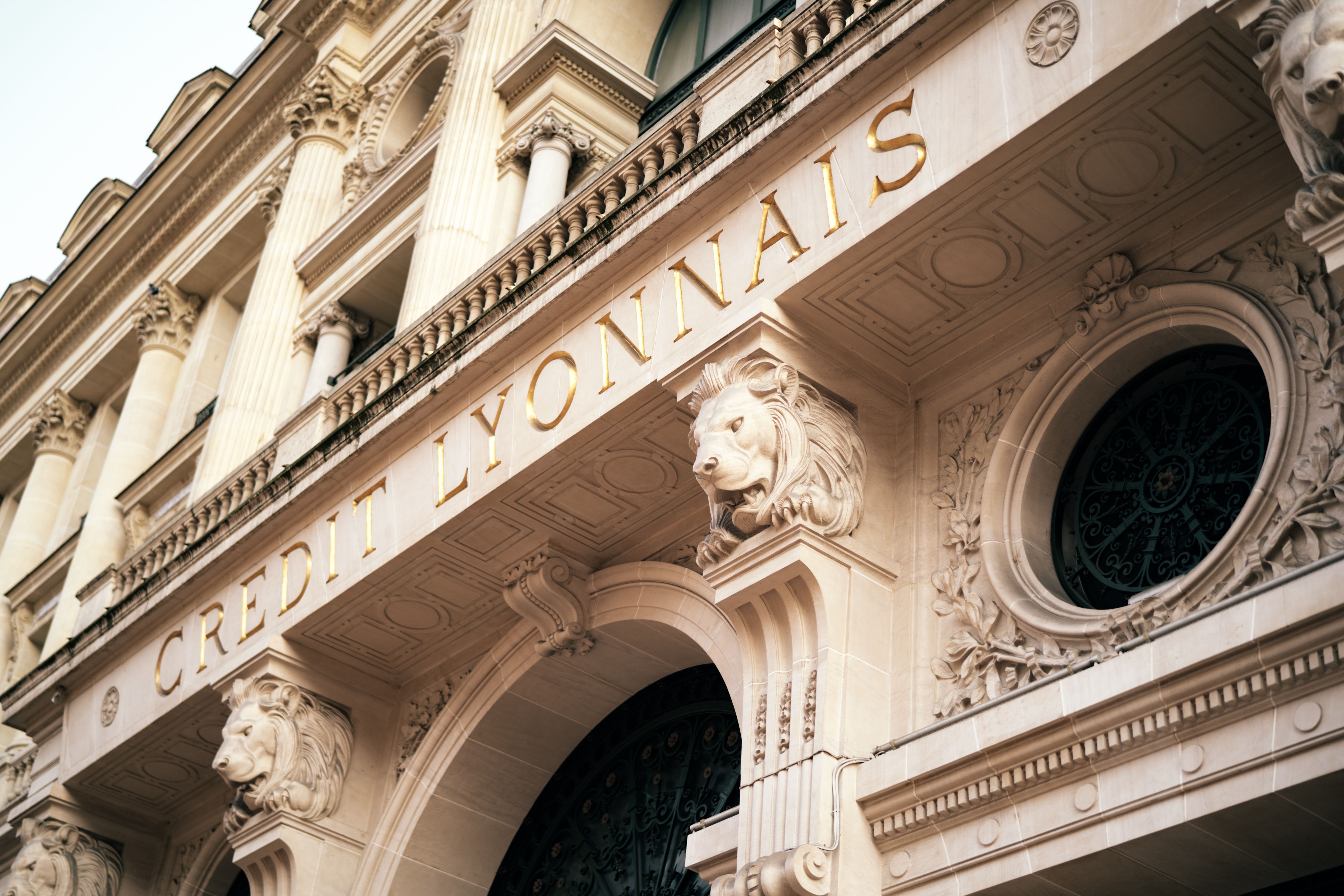
The new European alternative asset management platform launches with approximately €3 billion in assets under management, €500 million in seed capital and an ambition to exceed €10 billion in AUM. Hospitality is not currently among its stated priority sectors, but private equity, private debt, SME consolidation and the energy transition raise a strategic question: how ready is the Italian hotel industry to engage with institutional capital?
The launch of 21 NEXT is not, strictly speaking, a hotel industry story.
Yet it may tell us a great deal about the future financing landscape of Italian hospitality.
The new European alternative asset management platform brings together the expertise of 21 Invest and 21 Tages, under the strategic umbrella of Edizione, and launches with approximately €3 billion in assets under management, 11 active funds and more than 100 professionals.
Its stated ambition is significant: to grow beyond €10 billion in assets under management.
Edizione, the platform's majority shareholder, is also making €500 million in seed capital available to support the development of new investment strategies.
The platform is built around four pillars:
private equity, private debt, infrastructure and energy transition.
Hospitality is not currently included among its explicitly stated priority sectors.
It would therefore be inaccurate to suggest that 21 NEXT has announced a move into the hotel investment market.
The more important point is different.
The emergence of financial platforms capable of combining equity, private credit, infrastructure investment and capital dedicated to the industrial transformation of SMEs illustrates how rapidly Europe's capital markets are evolving.
And an industry such as Italian hospitality — fragmented, asset-heavy, capital-intensive and in need of consolidation — is unlikely to remain unaffected by this evolution.
From the perspective of Investimenti Alberghieri, therefore, the real question is not:
Will 21 NEXT invest in hotels?
The broader and more relevant question is:
How many Italian hotel businesses are genuinely ready to become investable for institutional capital?
Capital Is Changing Before Hotels Do
Historically, a significant proportion of the Italian hotel industry has funded growth and investment through a relatively straightforward structure:
family equity + bank financing + real estate collateral.
It is a model that has been entirely consistent with a market characterised by family ownership and a strong real estate component.
However, once an investment becomes more complex, that model can begin to show its limitations.
A hotel company may require capital to:
-
acquire additional properties;
-
fund significant capex programmes;
-
manage generational succession;
-
refinance existing debt;
-
create a multi-asset hotel platform;
-
support a turnaround;
-
enter new markets;
-
develop new operating models;
-
finance acquisitions through buy-and-build strategies.
In these situations, traditional bank lending may not be sufficient — or may simply not be the most appropriate financial instrument.
It is precisely within the space between traditional equity and bank financing that instruments such as private equity and private debt become increasingly relevant.
The growth of platforms such as 21 NEXT therefore reflects a structural shift:
private capital is becoming more sophisticated, more specialised and increasingly capable of financing different stages in the lifecycle of a business.
Private Debt: Potentially the Most Relevant Segment for Hospitality
21 NEXT includes the Tages Credit Fund, a private debt vehicle of approximately €145 million focused on Italian mid-sized companies.
There is currently no announcement identifying hospitality specifically as a target sector.
Nevertheless, private debt deserves particular attention from hotel owners and investors.
A hotel business may be supported by a highly valuable property and yet face an apparently contradictory situation:
it owns a substantial real estate asset but requires more flexible financial instruments than a conventional mortgage facility can provide.
This can occur in acquisitions, major refurbishments, extraordinary transactions, temporary liquidity requirements, expansion projects or refinancing situations.
At that point, the way the investment is assessed changes.
It is no longer sufficient to ask:
What is the property worth?
The analysis must also determine:
How much cash flow can the business generate?
What is its normalised EBITDA?
What is its sustainable GOP?
How much debt can the business genuinely support?
How much additional capital will be required after acquisition?
What DSCR can it maintain?
How robust is the business plan?
Does the management team have the capability to deliver the projected results?
This is the same underlying approach applied to restructuring, turnaround and hotel finance assignments analysed through Investhotel:
the value of the property, the value of the operating business and the sustainability of its capital structure are three different things.
Confusing them can lead to significant investment mistakes.
When Does a Hotel Become Truly Investable for Institutional Capital?
A good property is not enough.
A professional investor is likely to assess at least seven dimensions simultaneously.
1. Normalised EBITDA and GOP
Underlying earnings must be reconstructed by removing exceptional items, operating inefficiencies and costs that may not be representative of future performance.
2. Debt Sustainability
The key issue is not simply how much debt can be raised, but how much debt can actually be serviced through operating cash flows.
3. True Capex Requirements
The acquisition price represents only one component of the total investment.
Refurbishment, regulatory compliance, FF&E, plant and equipment, technology, repositioning and working capital must also be properly quantified.
4. Governance
Transparent financial statements, reliable reporting, clear decision-making processes and an appropriate corporate structure all reduce perceived investment risk.
5. Management
An operation that depends entirely on its owner-entrepreneur is inherently difficult to scale.
A professional and replicable management structure can, by contrast, acquire value in its own right.
6. Scalability
An investor needs to understand whether the operating model works only for that specific hotel or whether it can be replicated across additional assets.
7. Exit Strategy
Every institutional investment ultimately contains one fundamental question:
Who could acquire this investment in five, seven or ten years, and why should they be willing to pay more for it?
These are the factors that turn a hotel property into a genuine investment proposition.
The Italian Hotel Is Often an SME Built Around a Valuable Property
This is perhaps one of the defining characteristics of the Italian market.
Behind hotel properties of significant real estate value, there are often relatively small family-owned businesses.
The family may control a substantial asset while the operating company still relies on:
basic reporting;
limited management accounting;
strong dependence on the owner;
family-centred governance;
limited financial planning;
a relatively underdeveloped management structure;
limited capacity for consolidation.
For institutional capital, this represents both a challenge and an opportunity.
The challenge is straightforward:
a valuable property does not automatically make the company operating it investable.
The opportunity lies in transforming sound but insufficiently structured businesses into more efficient, professionally managed and scalable organisations.
That transformation requires the simultaneous integration of real estate, financial, operational, organisational and commercial expertise.
This multidisciplinary approach sits at the heart of Hotel Management Group, where asset analysis, management control, positioning, operations, governance and performance are considered as interconnected components of the same value-creation process.
From a Single Hotel to a Platform: Where Enterprise Value Can Be Created
One of the major themes for Italian hospitality over the coming years may be the transition:
from individual hotel ownership to hotel platforms.
An independent hotel can be an excellent investment.
But it remains intrinsically linked to a single asset.
When an organisation instead develops:
centralised management;
revenue management systems;
marketing capabilities;
procurement;
management accounting;
technology;
operating procedures;
a recognised brand;
the ability to acquire or manage additional properties;
value can progressively migrate from the underlying real estate towards the operating company itself.
| Traditional Hotel | Hotel Platform |
|---|---|
| Value primarily driven by real estate | Real estate value + enterprise value |
| Owner-dependent management | Professional management |
| Single asset | Multi-asset portfolio |
| Limited economies of scale | Centralisable functions |
| Primarily organic growth | Buy-and-build potential |
| High concentration risk | Greater diversification |
| Primarily property-based exit | Property, corporate or strategic exit |
This is where hospitality can become particularly relevant to private equity.
Institutional capital does not necessarily need to buy hotel rooms.
It can invest in an organisation's ability to control an increasing number of them.
The Vacalians Precedent Shows That Tourism Is Not Unfamiliar Territory
There is also an interesting precedent.
21 Invest has previously operated within the accommodation industry through Vacalians Group, an outdoor hospitality operator.
The group was built through the combination of Village Center and Vacances Directes and subsequently pursued a strategy of consolidation and international expansion.
By the time of its exit in 2015 through a sale to Permira, Vacalians operated across 279 campsites, including 46 owned locations and 233 third-party sites, and generated approximately €140 million in revenue.
This does not mean that 21 NEXT intends to replicate that strategy in the hotel sector.
Such a conclusion would not be supported by the information currently available.
What the Vacalians case does demonstrate, however, is that one concept of significant relevance to Italian hospitality is not unfamiliar to 21 Invest:
consolidating fragmented operators and turning them into a larger-scale platform.
That is precisely the dynamic worth watching.
The New €800 Million Fund Does Not Identify Hospitality as a Target Sector
On the private equity side, 21 NEXT is preparing, through 21 Invest, a new pan-European lower mid-market fund with a target size of €800 million.
Its stated sector focus includes healthcare, technology & software, specialised industrials and business services.
Hospitality and hotel real estate are therefore not currently among the declared verticals.
This distinction matters.
Serious investment analysis must continuously differentiate between:
facts, interpretation and scenarios.
The fact is that 21 NEXT is launching as a major alternative asset management platform.
The interpretation is that this provides further evidence of the growth of European private markets.
The scenario is that, over time, the increasing availability of alternative capital could also intersect with the hospitality industry.
These three levels should not be confused.
Energy Transition: For Hotels, It Is Not Merely an ESG Issue
The energy transition component creates another interesting dimension.
Through 21 Tages, the platform operates a portfolio of more than 500 photovoltaic plants with approximately 1 GW of capacity, alongside activities in other areas of the energy transition.
Again, there is no automatic connection with hospitality.
However, for resorts, holiday villages, thermal destinations, leisure properties and large hotels, energy already represents a meaningful operating cost.
Investment in energy efficiency can therefore generate at least three effects:
lower OPEX;
higher cash flow;
an indirect increase in asset value.
For this reason, energy transition strategies should not be considered exclusively through an ESG lens.
When properly structured, they can become a tangible component of value creation.
The Real Cost of a Hotel Is Not Its Acquisition Price
To understand why professional investors approach hospitality differently, consider one recurring market mistake:
confusing the property's acquisition price with the total capital required to execute the investment.
A hotel acquired for €10 million might also require:
€4 million in refurbishment;
€1.5 million in FF&E;
€1 million in financing, professional and technical costs;
working capital;
commercial investment;
potential operating losses during the repositioning period.
The true investment may therefore be closer to €17–18 million than to the €10 million stated in the acquisition agreement.
Only then can the actual investment return be assessed.
This is why the analysis carried out by Investimenti Alberghieri consistently seeks to distinguish between:
the asset purchase price;
the total capital requirement;
the potential value of the investment.
They are three different numbers.
From Real Estate Value to Enterprise Value
The growth of institutional capital may also drive a second cultural shift.
Many Italian hotels continue to be valued primarily as real estate assets.
But when an organisation develops management expertise, a brand, technology, procedures, contracts, distribution systems and the ability to replicate its operating model, another concept becomes increasingly relevant:
enterprise value.
This represents a significant conceptual shift.
Value no longer resides exclusively in the square metres owned.
It also resides in the organisation's ability to generate earnings through properties that may be owned or operated on behalf of third parties.
A hotel company capable of controlling a growing portfolio without necessarily owning every underlying property can become considerably more scalable.
And potentially far more attractive to professional capital.
This is one of the themes addressed by Roberto Necci in his analysis of the economic, managerial and financial transformation of the Italian hospitality industry:
the quality of management and governance can itself become a component of value.
The Real Challenge Is Not Finding Capital. It Is Becoming Financeable.
The increasing availability of alternative capital does not mean that every hotel business will be able to access it.
Quite possibly, the opposite will be true.
The more sophisticated the capital, the more rigorous the selection process becomes.
To enter the investment universe of institutional players, a company must be capable of producing reliable information and supporting a thorough due diligence process.
This requires:
clear financial accounts;
reliable reporting;
a credible business plan;
competitive analysis;
verified capex requirements;
professional management;
appropriate governance;
financial projections;
sensitivity analysis;
credible exit scenarios.
In other words:
before looking for capital, a business must become financeable.
This may be one of the most important transitions facing a significant part of the Italian hospitality industry.
Is 21 NEXT Therefore a Hotel Investment Story?
Directly, today:
no.
Strategically:
yes.
21 NEXT has not announced a hotel-focused fund.
Hospitality is not among the stated priority sectors for its new pan-European private equity vehicle.
However, the launch of a platform with approximately €3 billion in assets under management, €500 million in seed capital and strategies spanning private equity, private debt, infrastructure and energy transition represents another important indication of the direction in which European capital markets are moving.
More private capital.
Greater specialisation.
More alternative financing instruments.
More focus on cash flow.
More consolidation.
More professional management.
Greater capacity to finance industrial transformation.
It is difficult to imagine an industry such as Italian hospitality — made up of thousands of SMEs, rich in real estate assets yet still highly fragmented — remaining outside this process indefinitely.
The question, therefore, should not be:
Will 21 NEXT buy Italian hotels?
The more important question is:
How many Italian hotels would currently be genuinely investable for an organisation such as 21 NEXT?
The answer is probably only a minority of the market.
And that is precisely the point.
Because the next phase of consolidation in Italian hospitality may not be determined solely by who owns the properties, but increasingly by who can transform those properties into efficient, financeable, scalable businesses that institutional capital can understand and invest in.
CONFIDENTIAL ANALYSIS FOR INVESTORS, BANKS, FUNDS AND HOTEL OWNERS
Investimenti Alberghieri prepares independent assessments and confidential investment dossiers covering hotel assets, operating companies and transactions.
Our analysis may include:
-
asset valuation;
-
financial and operating analysis;
-
business plan review;
-
EBITDA and GOP normalisation;
-
capex assessment;
-
investment scenarios;
-
financial sustainability analysis;
-
assessment of operational potential;
-
identification of key risks and critical issues;
-
alternative management strategies;
-
transformation and repositioning scenarios;
-
sale or lease alternatives;
-
extraordinary transactions;
-
value-creation and exit scenarios.
Our services are designed for investors, private equity funds, banks, lenders, servicers, hotel operators, property owners and parties involved in UTP/NPL situations, including confidential mandates.
Enquiries and information:
info@investimentialberghieri.it