Following five unsuccessful attempts to find a buyer, a historic five-star hotel property in Italy's Piedmont region is back on the market. An investment analysis of its acquisition cost, capital expenditure requirements, potential operating performance and repositioning options reveals why a substantial price reduction does not necessarily translate into an attractive investment.
Hotel Investment Analysis | 10 November 2026
Investimenti Alberghieri | Distressed Hospitality, Real Estate Valuation & Value-Add Investment Strategies
Castello di Parella Returns to the Market: Asking Price Falls from €12 Million to Approximately €7 Million
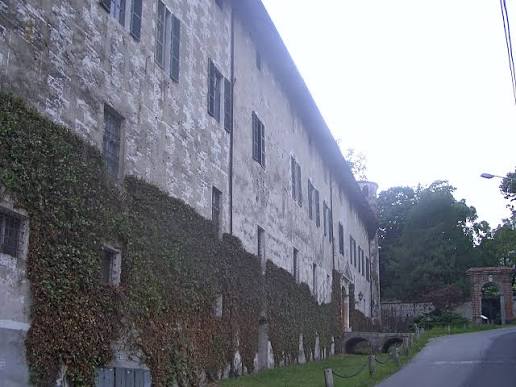
Castello di Parella, a historic estate in the Canavese area of Piedmont, near Turin, has once again attracted attention from real estate investors and hospitality operators.
According to reports published on 6 November 2026 by Quotidiano del Canavese and La Stampa, the extraordinary administrators of Manitalidea have launched a further attempt to sell the property, which previously operated as a five-star luxury hotel.
The aggregate asking price is reportedly approximately €7 million, excluding VAT, compared with an initial figure of around €12 million.
That represents a nominal price reduction of approximately 41.7%.
This is understood to be the sixth attempt to dispose of the property, following five unsuccessful sale processes.
The deadline for submitting offers has been reported as 16 December 2026 at 12:00 noon.
However, the definitive terms must be confirmed against the latest official sale notice. At the time of this analysis, the publicly accessible Manital website still displayed the previous fifth-round notice, marked as suspended.
The significance of this transaction extends well beyond the sale of a prestigious historic building.
It raises a fundamental question in hospitality investment:
Can a landmark luxury hotel represent an attractive investment after a substantial price reduction if its future earnings potential remains uncertain?
Answering that question requires a clear distinction between three concepts that are often mistakenly treated as interchangeable:
-
Real estate value.
-
Operating business value.
-
Investment value to a prospective buyer.
Each requires a different analytical approach.
1. A Former Five-Star Hotel with an Unusual Real Estate Profile
Castello di Parella is a historic property whose origins date back to the sixteenth century and which has undergone numerous alterations and restoration works over time.
According to published reports, the estate has the following characteristics:
| Property characteristic | Reported information |
|---|---|
| Location | Parella, Turin, Piedmont, Italy |
| Previous use | Five-star luxury hotel |
| Former room inventory | Approximately 20 rooms |
| Reported estate size | Approximately 6,500 sq m |
| Ancillary features | Parkland, vineyards, land and a natural swimming pond |
| Previous commercial activities | Hotel, restaurant, events and wine-related hospitality |
| Additional facilities | Wellness and conference spaces |
| Hotel operations ceased | 2019, according to press reports |
| Reported historical investment | Approximately €40 million |
| Indicative aggregate asking price | Approximately €7 million, excluding VAT |
The reported area of 6,500 sq m requires confirmation through technical documentation, with a distinction between gross built area, external land and space capable of generating commercial income.
This distinction is particularly important.
Castello di Parella cannot be valued simply as a 20-room hotel. Equally, it cannot be assessed using the assumptions applicable to conventional commercial real estate.
Its potential value depends on the relationship between its heritage characteristics, permitted uses, maintenance obligations, operating costs and addressable market demand.
Architectural significance may support pricing power, but it does not automatically create cash flow.
That is the first principle an investor should recognise when evaluating this opportunity.
2. The Purchase Price Is Not the Total Investment Cost
According to the figures reported in the local press, the indicative allocation of value is as follows:
| Asset component | Reported value |
|---|---|
| Main castle property | €6,200,000 |
| Adjacent land | €62,000 |
| Additional land | €55,000 |
| Natural swimming pond | €414,000 |
| Furniture, fixtures and movable assets | €318,000 |
| Total of reported components | €7,049,000 |
The precise perimeter of the sale, the rights being transferred and the applicable VAT treatment must be verified against the official documentation.
On a purely mathematical basis, the aggregate figure equates to approximately €352,450 per room, assuming the property's previous configuration of 20 rooms.
However, this metric must be interpreted with considerable caution.
Price per key is a useful valuation indicator when comparing hotels with sufficiently similar locations, market positioning, operating profiles, physical characteristics and earnings potential.
For a historic castle, however, the metric may be misleading.
An investor would not simply be acquiring 20 guestrooms.
The acquisition would also involve extensive spaces and facilities whose revenue-generating capacity could vary significantly.
The relevant investment question therefore becomes:
How much capital must ultimately be committed to transform the entire estate into a commercially sustainable hospitality business?
An apparently attractive purchase price is not, in itself, evidence of an attractive hospitality investment.
3. Five Unsuccessful Sale Attempts: What Is the Market Telling Investors?
The succession of unsuccessful sale attempts deserves closer examination.
Reducing the asking price from approximately €12 million to €7 million is significant, but it does not establish whether the new figure represents fair market value.
A failure to attract buyers may reflect several factors:
-
A price that does not adequately reflect investors' required returns.
-
Significant or uncertain refurbishment expenditure.
-
Procedural complexity and restrictive transaction conditions.
-
Heritage, planning and regulatory constraints.
-
Limited liquidity for highly specialised historic assets.
-
The absence of a substantiated operating business plan.
-
Substantial funding requirements before the property can reopen.
-
Difficulty identifying a suitably qualified hospitality operator.
The absence of a successful sale does not establish that an asset lacks intrinsic value.
It indicates, more narrowly, that previous transaction terms did not generate sufficient demand to complete a disposal.
This distinction matters.
A property may possess outstanding architectural qualities, substantial historical investment and compelling repositioning potential while remaining unable to deliver an acceptable return on invested capital.
For distressed hospitality assets, the gap between perceived property value and supportable investment value is often the central issue.
4. The Tourism Market: Piedmont Is Growing, but Demand for Luxury Hospitality in Canavese Must Be Proven
Any valuation of Castello di Parella must begin with an assessment of the demand it could realistically capture.
According to Piedmont's regional tourism observatory, the region recorded the following results in 2025:
-
More than 6.73 million tourist arrivals, up 7.1%.
-
Approximately 18.17 million overnight stays, up 7.5%.
-
International visitors accounting for 53% of overnight stays.
For the Canavese area, local tourism statistics published in April 2026 indicated approximately 192,974 arrivals and 427,657 overnight stays in 2025, representing growth of 14.6% and 10.8%, respectively.
These figures point to positive momentum across the wider destination.
They do not, however, establish sufficient demand for a five-star luxury hotel.
Regional tourism growth encompasses multiple accommodation categories, price segments and travel motivations.
A credible investment case for Castello di Parella would require specific analysis of several demand segments.
High-end leisure demand
The ability to attract domestic and international travellers willing to pay premium room rates for a distinctive historic property.
Destination weddings and private events
Market depth, seasonality, venue capacity, licensing requirements and the economics of event-driven revenue.
Corporate retreats
Potential demand from businesses and organisations seeking exclusive meeting venues and private hospitality experiences.
Restaurants and external customers
The ability to generate profitable revenue from guests who are not staying overnight.
Experiential tourism
Opportunities to combine heritage, gastronomy, wine tourism and curated regional experiences.
The strategic question is straightforward:
Could Castello di Parella become a destination in its own right, capable of attracting a dedicated premium clientele, or would it depend primarily on existing tourism flows into the surrounding area?
The distinction has fundamental implications for achievable room rates, occupancy, marketing costs and long-term profitability.
5. Competitive Benchmarking: Which Properties Provide Relevant Reference Points?
Professional hospitality investment analysis requires an appropriately selected competitive set.
In the case of Castello di Parella, three properties in Piedmont offer useful qualitative reference points.
| Property | Rooms | Market positioning |
|---|---|---|
| Castello di Parella | Approx. 20 previously | Former luxury hotel; currently inactive |
| Castello di Pavone | 27 | Historic hospitality, dining and events |
| Castello di Montaldo | 39 | Four-star superior hotel, wellness and events |
| Castello di Guarene | 12 | Luxury hospitality, Relais & Châteaux |
These examples illustrate different operating models. They should not be treated as directly comparable investments without further financial and market adjustments.
Castello di Pavone: A Regional Heritage Hospitality Model
Located in the Canavese area, Castello di Pavone combines 27 guestrooms with dining and event facilities.
Its business model provides a relevant point of reference for assessing the commercial potential of historic hospitality properties within the wider destination.
Published rates from Turismo Torino e Provincia include indicative double-room prices of €250–€270 and suite rates of €330–€350.
These are advertised rates, not achieved average daily rates.
They therefore cannot be used as direct evidence of the pricing Castello di Parella could sustain.
Nevertheless, the property offers a useful illustration of how heritage accommodation can be positioned within the regional market.
Castello di Montaldo: A Diversified Revenue Model
Castello di Montaldo, located in the Turin metropolitan area, offers 39 rooms and suites alongside wellness and event facilities.
Its relevance lies in the combination of accommodation and ancillary revenue streams.
The operating model demonstrates the importance of assessing total revenue generation rather than focusing exclusively on room income.
Differences in scale, location, market positioning and commercial infrastructure must, however, be considered.
Castello di Guarene: A Luxury Destination Model
Castello di Guarene operates within the Relais & Châteaux network and offers 12 rooms and suites.
Its positioning illustrates how a historic property can form the foundation of an exclusive luxury hospitality proposition.
However, the commercial strength of the surrounding destination, particularly its internationally recognised wine and gastronomy offering, is an important differentiating factor.
A similar positioning cannot simply be transferred to Parella without assessing local demand and destination appeal.
What Does the Competitive Analysis Suggest?
The benchmarking exercise identifies three potential strategic directions:
-
Heritage accommodation supported by dining and events.
-
A resort-style proposition built around multiple revenue streams.
-
A highly differentiated luxury destination with a limited number of rooms.
It does not establish that Castello di Parella could achieve the same room rates, occupancy levels or operating margins as any of these properties.
A complete assessment would require verified operating metrics, including:
-
Achieved ADR.
-
Revenue per available room (RevPAR).
-
Occupancy and seasonality.
-
Gross operating profit (GOP).
-
EBITDA.
-
Revenue by department.
-
Maintenance expenditure.
-
Comparable transaction values, where available.
The fundamental conclusion is that Castello di Parella should be assessed as a hospitality business requiring a new investment strategy, rather than simply a hotel awaiting reopening.
6. How Much Capital Would Be Required to Reposition Castello di Parella?
The acquisition price is only the starting point.
A complete investment appraisal must also consider potential refurbishment, mechanical and electrical upgrades, regulatory compliance, professional fees, pre-opening expenditure, working capital and contingency reserves.
To illustrate the significance of these variables, we have developed three hypothetical operating scenarios.
Methodological disclaimer: The following figures are illustrative financial assumptions, not forecasts or appraisals of Castello di Parella. No verified technical CAPEX programme, updated property valuation or historical operating accounts have been incorporated into the model.
All three scenarios assume 20 available rooms and 365 operating days per year.
Three Illustrative Operating Scenarios
| Financial indicator | Conservative | Base Case | Upside |
|---|---|---|---|
| Occupancy | 50% | 65% | 75% |
| Average daily rate | €280 | €350 | €475 |
| Rooms revenue | €1.02m | €1.66m | €2.60m |
| Ancillary revenue | €0.60m | €1.20m | €1.80m |
| Total revenue | €1.62m | €2.86m | €4.40m |
| Assumed EBITDA margin | 18% | 27% | 32% |
| EBITDA | €292,000 | €772,000 | €1,408,000 |
| Maintenance reserve | 3% of revenue | 3% of revenue | 3% of revenue |
| Normalised operating cash flow | €243,000 | €687,000 | €1,276,000 |
Ancillary revenue hypothetically includes food and beverage, private events and additional guest services.
The EBITDA margins are scenario assumptions and do not represent verified operating benchmarks for the asset.
A maintenance reserve is deducted separately to provide a simplified indication of cash flow available before financing costs and income taxes.
The upside scenario assumes particularly demanding commercial and operational performance.
It should not be interpreted as an achievable forecast without substantial supporting evidence.
How Does CAPEX Change the Investment Case?
Using an indicative acquisition cost of €7.049 million, the following assumptions illustrate the impact of different capital requirements.
| Investment component | Conservative | Base Case | Upside |
|---|---|---|---|
| Acquisition cost | €7.05m | €7.05m | €7.05m |
| Assumed refurbishment CAPEX | €5.50m | €3.50m | €2.50m |
| Other costs and reserves | €1.20m | €1.00m | €0.80m |
| Total capital requirement | €13.75m | €11.55m | €10.35m |
| Stabilised operating cash flow | €243,000 | €687,000 | €1,276,000 |
| Operating yield on cost | 1.8% | 5.9% | 12.3% |
Figures are rounded and exclude a specific assessment of VAT, debt financing, income taxes, development timelines and operating losses during the ramp-up period.
The operating yield on cost is calculated by dividing stabilised operating cash flow by total invested capital.
It is not equivalent to a project-level internal rate of return (IRR).
The implications are substantial.
The same property, acquired at the same price, can produce dramatically different investment outcomes depending on the operating strategy and additional capital expenditure required.
A credible investment appraisal must therefore focus on the economics of the completed project rather than the acquisition price alone.
7. What Is the Maximum Price an Investor Could Rationally Pay?
This is where the analysis becomes particularly relevant to investment decision-making.
As an initial sensitivity exercise, assume that an investor requires an 8% stabilised operating return on total invested capital, before financing costs and income taxes.
The 8% figure is purely illustrative. It is neither an established benchmark for Castello di Parella nor a recommendation regarding the appropriate risk-adjusted return.
Under this simplified framework:
Maximum supportable acquisition price = (Stabilised annual operating cash flow ÷ Target operating yield) − Refurbishment CAPEX − Other costs and reserves
Applying this formula to the three scenarios produces the following results:
| Scenario | Theoretical maximum acquisition price |
|---|---|
| Conservative | Not economically supportable under the assumptions |
| Base Case | Approximately €4.08m |
| Upside | Approximately €12.65m |
Under the conservative scenario, forecast operating cash flow would not be sufficient to support the assumed refurbishment expenditure and other costs at the target return, even before assigning any purchase price to the property.
Under the base case, the theoretical maximum acquisition price would be substantially below the figure currently reported in the press.
Under the upside scenario, stronger operating performance and lower capital expenditure could support a materially higher acquisition price.
These results require careful interpretation.
They do not imply that Castello di Parella is worth €4.08 million or €12.65 million.
They demonstrate how sensitive investment value can be to operating assumptions that have not yet been independently substantiated.
This methodology is a preliminary yield-on-cost test rather than a full discounted cash flow valuation.
A comprehensive investment model would also need to incorporate:
-
Development and reopening timelines.
-
Multi-year operating forecasts.
-
Discounted cash flows.
-
Terminal value assumptions.
-
Financing structure and debt service.
-
Investment-level net present value (NPV).
-
Internal rate of return (IRR).
-
Exit scenarios and sensitivity analysis.
The objective is not simply to determine whether €7 million is objectively cheap or expensive.
It is to establish which operating strategy, if any, would allow an investor to pay that price while achieving an appropriate risk-adjusted return.
Considering the Acquisition of a Hotel or Hospitality Property?
The difference between an asking price and an economically supportable acquisition price can determine the success or failure of a hospitality investment.
Investimenti Alberghieri provides investment analysis, feasibility assessments and financial modelling to support property owners, investors and hospitality operators.
For an initial assessment, contact info@investimentialberghieri.it.
8. Four Potential Value-Creation Strategies
The future of Castello di Parella should not necessarily be defined by its previous operating model.
A successful repositioning would require a clear understanding of the property's competitive advantages, physical constraints and realistic commercial opportunities.
Four alternatives merit consideration.
Strategy A — Independent Luxury Boutique Hotel
Reopen and reposition the estate as an independently operated luxury hotel targeting a discerning domestic and international clientele.
Investment opportunity
Leverage the property's heritage identity, architectural uniqueness and exclusivity to establish a differentiated premium hospitality proposition.
Principal risk
A limited room inventory may struggle to absorb the fixed operating costs and maintenance requirements associated with an extensive historic property.
The key variable would be the ability to sustain premium ADR levels at realistic occupancy rates.
Strategy B — Luxury Hospitality, Private Events and Destination Weddings
Develop a diversified operating model combining guestrooms, private celebrations, weddings, corporate events, dining and curated experiences.
Investment opportunity
Broaden revenue generation beyond accommodation and create commercial uses for spaces that do not directly contribute to room inventory.
Principal risk
Increased operating complexity, seasonal demand, specialist staffing requirements, dedicated capital expenditure and regulatory approvals.
A credible business plan would require separate departmental forecasts, contribution margins and cash flow assumptions.
Revenue from events should not be treated as economically equivalent to rooms revenue without analysing the different cost structures.
Strategy C — Separation of Real Estate Ownership and Hotel Operations
Structure the investment around a property-owning entity and an experienced hospitality operator.
Potential arrangements could include a lease, management agreement or other appropriately negotiated operating structure.
Investment opportunity
Separate real estate investment responsibilities from specialist hotel management capabilities.
Principal risk
The underlying business may be unable to generate sufficient earnings to remunerate the operator, property owner and invested capital simultaneously.
An operator-selection process should ideally be informed by a preliminary assessment of the property's sustainable earnings and contractual capacity.
Strategy D — Mixed-Use Hospitality and Phased Repositioning
Explore a combination of accommodation, cultural activities, food and wine experiences, private events and other compatible uses.
Investment opportunity
Increase utilisation across the estate and diversify the revenue base.
Principal risk
Greater project complexity, potentially extensive planning requirements and the possibility that individual business activities fail to generate sufficient operating margins.
Any alternative use would require detailed planning, heritage and regulatory assessments.
Expertise in hotel management, governance and operational strategy can provide an important framework for examining the relationship between real estate ownership, operational models and long-term business sustainability.
9. Why €40 Million in Historical Investment Does Not Establish Today's Market Value
One of the most striking aspects of the Castello di Parella story is the approximately €40 million in historical investment reported by the press.
Compared with an indicative current asking price of €7 million, this difference may initially appear to represent an exceptional buying opportunity.
However, historical expenditure does not automatically translate into current market value.
Past investment may reflect:
-
Extensive restoration and conservation requirements.
-
Design and construction choices.
-
Historical development costs.
-
Expenditure on ancillary facilities.
-
Market and financing conditions that no longer apply.
-
Investments that cannot be fully recovered through future operations.
For a prospective buyer, these costs are historical information.
They do not independently establish future earning capacity.
In professional hospitality valuation, the critical factors are the asset's sustainable cash flows, future capital requirements, market position, risk profile and available alternative uses.
This principle is particularly relevant in distressed investment situations.
Capital already invested cannot compensate for profitability that has yet to be demonstrated.
Further insights into the relationship between hotel management, operating performance, business valuation and investment returns are available through Roberto Necci's hospitality advisory platform.
10. Due Diligence: Seven Essential Checks Before Submitting an Offer
An acquisition of this nature should be preceded by a structured, multidisciplinary due diligence process.
At a minimum, investors should examine seven areas.
1. Official Sale Documentation and Valuation Reports
Verify the updated auction notice, valuation documents, composition of the sale lots, transferred assets, deposits, deadlines and contractual conditions.
Particular attention should be paid to the relationship between the main building, land, natural swimming pond, movable assets and any potential business-related components.
2. Property Title and Cadastral Position
Assess ownership, boundaries, title documentation, third-party rights, building and cadastral compliance and any outstanding encumbrances.
3. Heritage Protection and Planning Constraints
Identify applicable heritage restrictions, permitted uses, required authorisations and any relevant statutory pre-emption rights.
The commercial feasibility of additional activities should not be assumed before the relevant permissions have been established.
4. Technical Due Diligence
Assess structural condition, building services, fire safety, accessibility, maintenance requirements, existing installations and the cost of bringing the property back into operation.
5. Hospitality Market Assessment
Evaluate addressable demand, competing properties, achievable ADR, occupancy, seasonality and the commercial potential of ancillary revenue streams.
6. Integrated Financial Business Plan
Prepare multi-year forecasts covering GOP, EBITDA, operating cash flow, CAPEX, financing requirements, investment returns and downside scenarios.
The analysis should consider both stabilised performance and the cash absorption associated with reopening and ramp-up.
7. Transaction Structure and Exit Strategy
Review tax treatment, potential business transfers, financing arrangements, operating agreements, bankability and eventual exit options.
For a highly specialised historic asset, exit liquidity may be an important component of investment risk.
The greatest analytical mistake would be to treat preliminary information as definitive evidence.
A successful transaction requires technical, legal, commercial and financial findings to be reconciled within a coherent investment model.
11. Investment Assessment: A Potential Value-Add Opportunity, Not Yet a Demonstrably Attractive Investment
Castello di Parella offers several characteristics likely to interest specialist investors in heritage real estate, luxury hospitality and complex repositioning projects.
Its architectural identity, substantial historical investment and reduced asking price warrant serious consideration.
However, the property's prolonged inactivity, potential refurbishment expenditure, operating complexity and uncertain commercial positioning require a disciplined approach.
The most significant challenge may be the relationship between its relatively limited former room inventory and the total capital needed to acquire, restore and operate the estate.
A 20-room hotel can deliver an exceptional guest experience.
That does not necessarily mean it can generate sufficient revenue and operating profit to support the cost structure of an extensive historic complex.
A diversified hospitality concept may therefore prove more relevant than a conventional rooms-led model.
Yet even this proposition must be tested against market demand, operational capacity and capital requirements.
Our Investment Perspective
The reduction from approximately €12 million to €7 million should not be interpreted as an automatic margin of safety.
An attractive opportunity would emerge only if the acquisition price, refurbishment requirements and prospective cash flows were demonstrably consistent with the investor's required return.
Architectural uniqueness does not create investment value in isolation.
It creates economic value when it can be translated into demand, pricing power, sustainable profitability and transferable asset value.
Castello di Parella should not be acquired simply because it costs less today than it did yesterday. It should be assessed on the basis of the cash flows it can realistically generate tomorrow.
That is the principle on which a disciplined hospitality investment decision should rest.
12. Distressed Hospitality Investments: Why Independent Advisory Matters
Acquiring a distressed hotel, an inactive hospitality asset or a historic property requiring repositioning involves far more than negotiating a purchase price.
It requires an integrated understanding of real estate, hotel operations, financial modelling, capital expenditure, market demand and transaction risk.
Professional advisory should help investors answer five fundamental questions:
-
What is the asset realistically worth under alternative operating scenarios?
-
How much capital will be required to acquire and reposition it?
-
Which business model offers the strongest sustainable earnings potential?
-
What level of risk is involved, and how should it be reflected in the acquisition price?
-
Which ownership, financing and management structure is most appropriate?
Investimenti Alberghieri provides research, analysis and advisory services to support investment decisions across the hospitality sector.
Working within a broader ecosystem that includes Investhotel, dedicated to hotel investment and strategic transactions, the advisory approach may encompass:
-
Hotel and hospitality real estate valuations.
-
Acquisition feasibility studies.
-
Distressed hospitality investment analysis.
-
Financial modelling and investment business plans.
-
CAPEX assessment and financial sustainability reviews.
-
Hotel repositioning and value-creation strategies.
-
Analysis of lease agreements and hotel management structures.
-
Economic and financial investment memoranda.
-
Strategic assessments for owners, investors and hospitality operators.
The objective is not merely to identify properties available for acquisition.
It is to determine whether an investment offers a credible relationship between capital employed, sustainable earnings and risk.
Considering a Hotel Auction, Historic Property or Complex Hospitality Investment?
Before committing capital, establish not only the property's market value but also its total funding requirements, operating potential and achievable investment returns.
An independent financial and strategic assessment can help identify hidden risks, establish a supportable acquisition price and determine the most appropriate route to value creation.
Request a Preliminary Hotel Investment Assessment or Feasibility Study
Email: info@investimentialberghieri.it
Website: www.investimentialberghieri.it
Hotel investments should not be evaluated solely on their asking price. They should be assessed on the economic value they can realistically create.
Sources and Methodology
Transaction and Property Information
Tourism Market and Competitive References
Methodological and Investment Disclaimer
Transaction information and property characteristics are based on publicly available reports and remain subject to verification against the latest official sale documentation and technical assessments.
Competitive benchmarking is qualitative and does not constitute evidence of directly comparable real estate transactions.
Financial scenarios are independent illustrative models based on explicitly stated assumptions. They do not incorporate confidential operating records, an independent survey or a verified refurbishment budget for Castello di Parella.
This publication is an independent editorial investment analysis. It does not constitute a formal valuation, an offer to sell, a brokerage mandate or personalised investment advice.
FAQs
Is Castello di Parella for sale?
According to reports published on 6 November 2026, Castello di Parella is the subject of a further sale attempt, with an indicative aggregate asking price of approximately €7 million excluding VAT. The definitive conditions require verification against the updated official sale notice.
How much is Castello di Parella worth?
Its investment value cannot be established from the asking price alone. A reliable valuation requires analysis of property condition, capital expenditure, operating potential, cash flow forecasts and investment risk.
Is buying a distressed hotel in Italy a good investment?
Distressed hospitality properties can create value where the acquisition price, refurbishment costs and sustainable operating performance support an appropriate risk-adjusted return.
What due diligence is required when buying a hotel in Italy?
Investors should undertake legal, technical, planning, heritage, tax, commercial and financial due diligence before making an acquisition decision.
How can investors assess the value of a historic luxury hotel?
A comprehensive assessment combines hospitality market analysis, operating forecasts, CAPEX planning, discounted cash flow valuation and alternative-use scenarios.