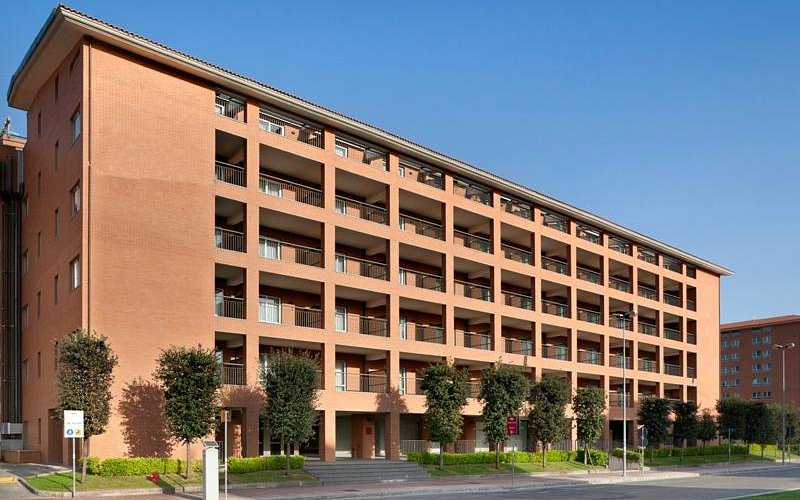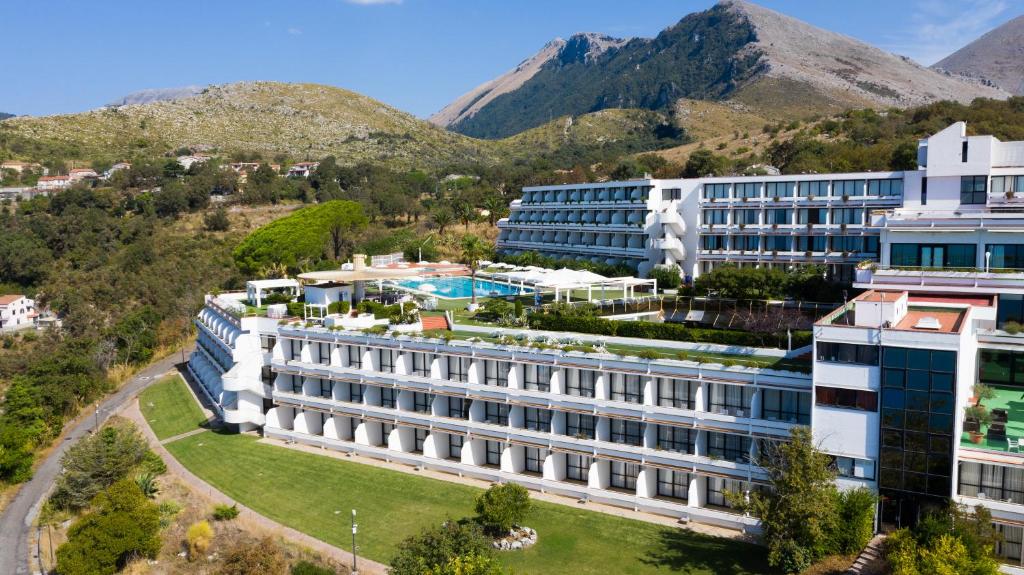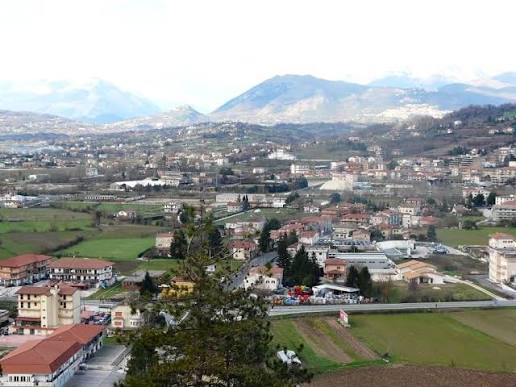
A former hotel that has been abandoned for years in the centre of Atina Inferiore has come under renewed scrutiny following residents’ complaints concerning deterioration, waste accumulation, hygiene issues and potential safety risks. The Municipality has announced the start of an administrative process aimed at identifying responsibilities and requiring the property to be cleaned up and made safe. There is currently no documented public sale of the asset. But that is precisely what makes the case relevant: it shows how real estate distress can begin long before a formal procedure, when an asset stops generating income and starts generating costs, risks and value erosion.
The property is located in Ponte Melfa, in the Atina Inferiore area, province of Frosinone, Lazio.
According to local press reports published on 11 October 2026, the Mayor of Atina, Pietro Violante, announced the launch of an administrative process aimed at clarifying responsibilities relating to the condition of the complex and moving towards remediation and site safety works.
The issues reported by residents include:
-
accumulated waste;
-
uncontrolled vegetation;
-
animals and pests;
-
unpleasant odours;
-
parts of the building considered potentially unsafe;
-
possible hygiene and health concerns.
Based on the sources reviewed, there is currently no documented public sale process, asking price, new buyer or approved redevelopment scheme.
And this is precisely the point.
Distress Does Not Begin When a Sale Process Starts
It can begin years earlier.
A Closed Hotel Is Not a Static Asset
When a hotel ceases operations, it is often viewed as a temporarily unproductive property.
That is an incomplete assessment.
A closed hotel continues to evolve economically.
Only in the wrong direction.
Over time, the asset may accumulate:
**Physical Deterioration
-
Deferred Maintenance
-
Safety Risk
-
Environmental Risk
-
Regulatory Exposure
-
Security Costs
-
Lost Revenue
-
Increasing CAPEX
= Value Erosion**
The property does not remain economically neutral.
Its value may continue to deteriorate.
From Revenue-Producing Asset to Liability-Producing Asset
An operating hotel should generate:
-
revenue;
-
GOP;
-
EBITDA;
-
cash flow;
-
real estate value.
An abandoned hotel may instead generate:
-
costs;
-
deterioration;
-
liabilities;
-
disputes;
-
regulatory requirements;
-
remediation obligations;
-
rising CAPEX.
The transition is therefore:
Revenue-Producing Asset → Liability-Producing Asset
This is one of the most underestimated dynamics in distressed real estate.
The owner still owns the asset.
But the asset may gradually stop behaving like an investment and begin behaving like a liability.
Deferred CAPEX: The Hidden Cost of Abandonment
When a hotel closes, investment normally stops.
The building does not.
Every intervention that is postponed accumulates into:
Deferred CAPEX
— capital that was not invested when required and may need to be spent later simply to return the property to a usable condition.
It may include:
-
roofing;
-
façades;
-
waterproofing;
-
windows and doors;
-
electrical systems;
-
plumbing;
-
HVAC;
-
lifts;
-
fire-safety systems;
-
guestrooms;
-
bathrooms;
-
kitchens;
-
external areas.
The critical point is that Deferred CAPEX rarely increases in a linear way.
A relatively minor issue left unresolved today may become a significantly more expensive problem tomorrow.
Time = Capital Destruction
In hotel redevelopment, time carries a cost.
For an abandoned asset, the effect is even more pronounced.
Each additional year may mean:
-
further deterioration;
-
water ingress;
-
vandalism;
-
loss of equipment;
-
higher security costs;
-
increased remediation costs;
-
reduced marketability.
At the same time, the property loses the income it could theoretically have generated under an alternative use.
The economic cost of abandonment therefore has two components:
Physical Value Destruction + Opportunity Cost.
Before the Hotel Comes the Liability Assessment
In the Ponte Melfa case, the most recent development concerns remediation and safety.
For an investor, this means that before discussing:
-
ADR;
-
occupancy;
-
RevPAR;
-
branding;
-
management;
-
marketing;
one first needs to understand:
what technical, environmental and administrative liabilities currently sit within the asset?
In distressed redevelopment, the business plan comes after the:
Liability Assessment.
Environmental Risk: Price Comes After Verification
Where a property has been abandoned for a prolonged period, conventional technical due diligence may not be enough.
The investor may also need to investigate, where relevant:
-
waste;
-
deteriorated materials;
-
water ingress;
-
mould;
-
potentially hazardous materials;
-
drainage;
-
contamination;
-
pests;
-
external-area conditions.
This does not mean assuming that all such issues are present at Ponte Melfa beyond those specifically reported by the sources.
It means they should be verified before any value is assigned to the property.
Environmental Risk must be quantified before price.
Safety Risk: When Property Ownership Creates Liability
Local reports also refer to building elements considered potentially unsafe.
An unused property can generate risk associated with:
-
falling materials;
-
unauthorised access;
-
fires;
-
intrusion;
-
unlawful occupation;
-
deteriorated fencing;
-
accidents.
Safety therefore is not merely a technical matter.
It is part of the property’s economic risk profile.
When the Municipality Intervenes, the Risk Profile Changes
As long as a deteriorating property remains simply unused, the issue may appear to be largely private.
When authorities such as:
-
the Municipality;
-
local health authorities;
-
municipal police;
-
other public bodies;
become involved, the situation may evolve into:
-
formal requirements;
-
orders;
-
mandatory works;
-
deadlines;
-
sanctions;
-
substitute works;
-
litigation.
In Atina, local reporting indicates that the Municipality has started a process aimed at identifying responsibilities and obtaining remediation and safety works.
This changes the nature of the case.
Physical deterioration becomes:
Regulatory Pressure.
This Is Not Yet an Asset Sale
An important distinction is required.
The fact that a property is:
-
closed;
-
deteriorated;
-
subject to complaints;
-
involved in administrative action;
does not automatically mean that it is:
For Sale.
The sources reviewed do not document:
-
an asking price;
-
a competitive sale;
-
a new buyer;
-
a sales mandate;
-
an approved redevelopment plan.
The case should therefore currently be classified as:
Distressed Property / Early Redevelopment Signal
rather than as a formally available acquisition opportunity.
And This Is Exactly Where Origination Can Begin
In distressed real estate, arriving before the formal procedure can be more valuable than arriving after it.
An asset may move through the following sequence:
Operational Decline
→ Closure
→ Abandonment
→ Regulatory Pressure
→ Strategic Decision
→ Restructuring / Disposal / Redevelopment
Ponte Melfa appears to sit somewhere in the middle of that chain.
The owner’s future strategy is not publicly known.
But as the cost of inaction rises, the pressure to make a strategic decision usually increases.
Cost of Inaction: The Number That Really Matters
An owner may delay a decision because:
-
redevelopment appears too expensive;
-
capital is unavailable;
-
market conditions are weak;
-
a sale would crystallise a loss.
But not deciding is not free.
Cost of Inaction
can be expressed as:
**Maintenance
-
Security
-
Taxes
-
Insurance
-
Remediation
-
Deterioration
-
Legal Exposure
-
Lost Revenue
-
Lost Asset Value**
When the cost of inaction becomes greater than the cost of taking a strategic decision, keeping the property idle becomes economically irrational.
Distress Can Begin Before Financial Distress
This is the most important lesson from the case.
A property can already be economically distressed before there are:
-
restructuring proceedings;
-
liquidations;
-
enforcement proceedings;
-
public sales.
Distress can emerge from:
Inaction + Deterioration + Capital Deficit.
This is genuine pre-distress real estate.
And it is often the stage where there is still the greatest room for:
-
analysis;
-
restructuring;
-
repositioning;
-
change of use;
-
new capital;
-
strategic partnerships.
As Is Value Comes Before Future Value
Before assigning any value to a hotel that has been closed for years, the first step is to determine its:
As Is Value.
Not its historical value.
Not the value it had when operating.
Not its theoretical value after redevelopment.
But its value in its current condition.
That requires at least:
-
ownership verification;
-
technical inspection;
-
structural assessment;
-
planning compliance;
-
cadastral compliance;
-
environmental review;
-
remediation cost estimate;
-
Deferred CAPEX estimate;
-
review of restrictions;
-
market analysis.
Only then can future potential be assessed.
Highest and Best Use: Should It Really Become a Hotel Again?
A property originally built as a hotel does not necessarily need to remain a hotel.
The analysis should begin with:
Highest and Best Use.
Potential scenarios could theoretically include, subject to planning and regulatory feasibility:
Scenario A
Return to traditional hospitality.
Scenario B
A new hospitality concept.
Scenario C
Serviced accommodation / long stay.
Scenario D
Residential or senior living.
Scenario E
Services or mixed-use functions.
None of these uses should be assumed to be permissible in Atina without verification.
But the principle remains:
Historical Use ≠ Highest and Best Use.
If It Returns to Hospitality, Market Comes Before Design
If hospitality were ultimately found to be the best use, the correct sequence would be:
Market → Product → Business Plan → Architecture → CAPEX
The first questions should be:
-
Who would stay in Atina?
-
Why would they come?
-
At what ADR?
-
At what occupancy?
-
With what seasonality?
-
Through which channels?
-
For how long?
Only after answering those questions should the project define:
-
room count;
-
services;
-
F&B;
-
concept;
-
project scale.
A building does not become economically viable as a hotel simply because it used to be one.
Destination Appeal ≠ Hotel Feasibility
Atina is located in the Comino Valley, an area with natural, cultural and food-and-wine attractions.
These elements may contribute to a future positioning strategy.
But they need to be translated into data.
The analysis should examine:
-
arrivals;
-
overnight stays;
-
corporate demand;
-
leisure demand;
-
events;
-
international demand;
-
nature tourism;
-
food-and-wine tourism;
-
competitors;
-
ADR;
-
occupancy.
An attractive destination does not automatically support a viable hotel.
Destination Appeal ≠ Hotel Feasibility.
Redevelopment or Demolition?
For a heavily deteriorated property, a more radical question may arise:
is it economically preferable to refurbish or rebuild?
The comparison should be between:
Redevelopment Cost
and
Replacement Cost.
The analysis should consider:
-
structural condition;
-
layout efficiency;
-
compliance costs;
-
energy performance;
-
restrictions;
-
recoverable floor area;
-
permitting timelines.
Preserving a building can create value.
But it can also preserve inefficiencies.
The Acquisition Price Would Only Be the Beginning
If the property were to come to market in the future, the acquisition price would represent only the first line item.
The true investment would be:
**Acquisition Price
-
Transaction Costs
-
Remediation
-
Safety Works
-
Technical Due Diligence
-
Planning Costs
-
Structural Works
-
MEP
-
CAPEX
-
FF&E
-
Pre-opening
-
Working Capital
-
Financing Costs
-
Contingency**
The result is the:
Total Cost Basis.
That is the figure that needs to be compared with future value.
Stabilised Value – Total Cost Basis
Value creation can be expressed as:
Stabilised Value – Total Cost Basis = Development Value Creation
If the future value does not adequately compensate for:
-
capital;
-
risk;
-
time;
-
execution;
the project does not create value.
Even if the acquisition price appears extremely low.
Cheap Property ≠ Cheap Investment
Abandoned assets often attract attention because they can appear inexpensive.
But a low price may simply reflect:
-
deterioration;
-
CAPEX;
-
liabilities;
-
long timelines;
-
planning risk;
-
weak demand;
-
permitting complexity.
For this reason:
Cheap Property ≠ Cheap Investment.
It is one of the core principles of distressed hospitality.
Stress Testing: How Robust Is the Project?
In a deteriorated asset, technical uncertainty must be incorporated into the model.
At least three scenarios should be considered.
Base Case
Expected CAPEX and normal timing.
Downside Case
Higher CAPEX and delays.
Severe Downside
A combination of:
-
higher remediation costs;
-
structural issues;
-
permitting delays;
-
higher interest rates;
-
weaker demand;
-
lower ADR.
The real test is:
does the equity survive when some assumptions fail?
If the answer is no, the investment case is fragile.
Urban Discount and Urban Regeneration Premium
An abandoned hotel does not affect only its own value.
It can also influence:
-
perceived safety;
-
urban quality;
-
neighbouring properties;
-
attractiveness of the area;
-
local investment appetite.
This creates an:
Urban Discount.
A successful regeneration project may create the opposite effect:
Urban Regeneration Premium.
Redevelopment can restore:
-
urban quality;
-
active use;
-
economic activity;
-
employment;
-
demand;
-
neighbourhood attractiveness.
But Regeneration Does Not Automatically Mean Investment
Regeneration can create social and urban value.
But to create financial value as well, the following need to align:
**Market Demand
-
Permitted Use
-
CAPEX
-
Funding
-
Operating Cash Flow
-
Exit Value.**
If one of these elements is missing, redevelopment may be urbanistically desirable but financially weak.
From Liability to Investable Asset
The transformation of an abandoned hotel can be described in four stages.
1. Risk Containment
Remediation and safety.
2. Asset Clarification
Ownership, restrictions, compliance and liabilities.
3. Strategic Repositioning
Highest and Best Use, market and concept.
4. Investment Structuring
CAPEX, financing, business plan and exit.
Only at the end of this process can the property once again become an:
Investable Asset.
An Integrated Analysis Through the Ecosystem
RobertoNecci.it develops the strategic perspective on the hotel industry and value-creation dynamics.
InvestimentiAlberghieri.it analyses hospitality real estate, distressed hospitality, Highest and Best Use and redevelopment.
Investhotel.it focuses on Total Cost Basis, financeability, Debt Capacity and capital structure.
HotelControl.it analyses KPIs, costs and operating sustainability.
HotelIntelligence.it integrates territorial data, market intelligence and decision support.
HotelMarketingLab.it examines demand, distribution, pricing and commercial performance.
HotelManagementGroup.it focuses on operating models, organisation and execution.
A distressed asset requires precisely this integrated approach:
real estate + technical + legal + market + finance + operations + execution.
The 15 Questions to Answer Before Assigning a Value
1.
Who is the legal owner and what is the exact asset perimeter?
2.
What is the planning status?
3.
Are there any compliance issues?
4.
What is the structural condition?
5.
What safety works are required?
6.
What remediation may be necessary?
7.
How much Deferred CAPEX has accumulated?
8.
What is the Total Redevelopment CAPEX?
9.
Which uses are legally permitted?
10.
Is hospitality still the Highest and Best Use?
11.
What demand can support the project?
12.
What EBITDA could a new operating business generate?
13.
What is the Total Cost Basis?
14.
What could the Stabilised Value be?
15.
How long would it take to turn the property back into a productive asset?
Before these questions are answered:
talking about price is premature.
The Economics of Abandonment
A former hotel can be expressed through a simple equation:
Historical Asset Value
– Physical Deterioration
– Deferred CAPEX
– Remediation Costs
– Regulatory Risk
– Time
= As Is Value
Future value creation requires a second equation:
**As Is Value
-
Capital
-
Redevelopment
-
Highest and Best Use
-
Management
-
Market Demand
= Stabilised Value**
The gap between these two equations represents the real work required from the investor.
Conclusion
The former Ponte Melfa hotel is interesting precisely because it is not yet a real estate sale.
It sits at an earlier stage.
It is the point at which abandonment begins to create economic, administrative and territorial consequences severe enough to make inaction progressively more expensive.
Local reporting refers to deterioration, waste, concerns raised by residents and an administrative process initiated by the Municipality aimed at remediation and safety works.
For investors, however, the lesson is broader.
A closed hotel does not automatically preserve its value while waiting for better market conditions.
It can lose value day after day.
Distress does not begin when a property enters a formal procedure. It often begins years earlier, when the cost of inaction becomes greater than the cost of making a decision.
That is the real threshold to monitor.
Once it is crossed, the owner should no longer ask only:
“What is the property worth today?”
The more relevant question becomes:
“How much is it costing me not to make a decision?”
And immediately after that:
“Which strategy can turn this liability back into an investable asset?”
A genuine real estate turnaround begins when the property stops being treated as a problem to postpone and starts being analysed as capital that needs to be rebuilt.
CTA — The Dossier Comes Before the Price
Are you assessing:
-
former hotels;
-
closed hospitality properties;
-
abandoned hospitality real estate;
-
distressed property;
-
assets requiring remediation;
-
conversion opportunities;
-
redevelopment projects?
InvestimentiAlberghieri.it provides independent preliminary analysis before investment and value-creation decisions are made.
We assess:
-
asset perimeter;
-
As Is Value;
-
Highest and Best Use;
-
Deferred CAPEX;
-
remediation costs;
-
redevelopment CAPEX;
-
Cost of Inaction;
-
Total Cost Basis;
-
business plan;
-
Stabilised EBITDA;
-
Debt Capacity;
-
downside scenarios;
-
Stabilised Value;
-
Exit Value.
We do not intermediate the purchase price. We analyse whether and how a property can return to creating value.
For enquiries:
info@investimentialberghieri.it
Methodological Note
This article draws on reports published on 6 and 11 October 2026 concerning a former hotel property located in the Ponte Melfa area of Atina Inferiore.
The sources report that the Municipality initiated a process aimed at clarifying responsibilities and moving towards the remediation and safety of the site.
References to deterioration, waste accumulation and potential hygiene, health or safety concerns derive from complaints and statements reported by the local press and do not constitute a technical survey carried out by InvestimentiAlberghieri.it.
The sources reviewed do not currently document a public sale process, asking price, new buyer or approved redevelopment project.
The conversion scenarios and economic considerations discussed in this article are methodological only.
Any valuation would require a full review of ownership, planning and cadastral documentation, technical condition, restrictions, administrative requirements and the feasibility of any proposed future use.