The redevelopment of the former Cinema Eolo in Florence’s historic Borgo San Frediano district is set to deliver a 16-room hotel and a 40-space car park. The owner has indicated an intention to appoint an external hotel operator. But which operating model could make the investment financially sustainable? An investment advisory analysis of revenue potential, GOP, lease structures, management agreements, capital expenditure and risk-adjusted returns in one of Italy’s most established hospitality markets.
InvestimentiAlberghieri.it | 12 October 2026 | Hotel Investment Advisory – Real Estate & Hospitality Finance
1. Former Cinema Eolo: This Is About More Than Real Estate
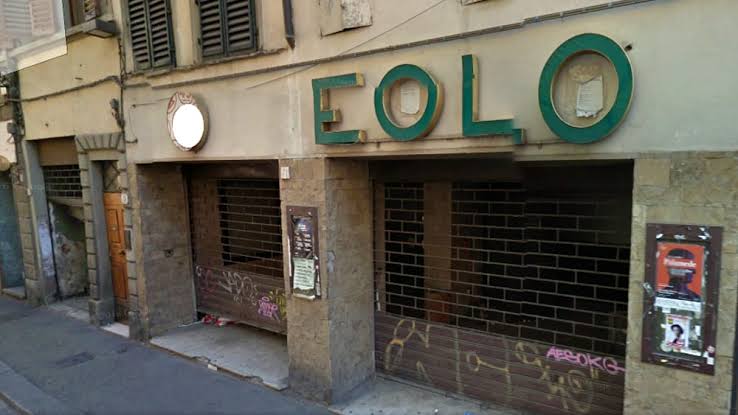
In Florence’s Borgo San Frediano district, plans to redevelop the former Cinema Eolo have returned to the spotlight.
According to a report published by la Repubblica on 10 October 2026, entrepreneur Francis Edward Fabri has been identified as the property's new owner, while Darth Bane is named as the company responsible for the construction works.
The announced development comprises a 16-room hotel and a car park with 40 spaces.
However, the most strategically significant detail is not the physical redevelopment itself.
It is the owner's stated intention to entrust the future hotel operation to a third-party operator.
This is what elevates the project from a conventional property redevelopment story to a potentially relevant hospitality investment case.
Value creation does not end with the physical transformation of a property. It depends on the ability to establish a financially viable hospitality business, supported by a contractual structure that appropriately allocates risk, responsibilities and returns.
The distinction is fundamental.
A successfully refurbished building may represent an attractive real estate product without necessarily qualifying as an efficient hotel investment.
Equally, a hotel capable of generating substantial revenue may prove financially unattractive if the initial capital commitment is disproportionate to its sustainable operating profitability.
The Cinema Eolo project therefore raises four fundamental investment questions:
-
What revenue and earnings potential could a 16-room hotel achieve in Florence's Oltrarno district?
-
To what extent could the 40 parking spaces contribute to the project's overall financial viability?
-
How would a hotel lease compare with a hotel management agreement in terms of income, risk allocation and investor returns?
-
What level of total capital investment could reasonably be supported by the property's future cash flows?
Answering these questions requires an integrated real estate, operational and financial assessment.
2. The Transaction: Established Information and Outstanding Questions
| Item | Information currently available |
|---|---|
| Property | Former Cinema Eolo |
| Location | Borgo San Frediano, Florence |
| Owner identified in press reports | Francis Edward Fabri |
| Company identified as responsible for the works | Darth Bane |
| Proposed hotel accommodation | 16 rooms |
| Proposed parking capacity | 40 spaces |
| Area under the previous development proposal | Approximately 1,000 sq m |
| Construction completion date reported | December 2027 |
| Proposed operating structure | Third-party hotel management |
These details require careful interpretation.
The property's sale was not completed in October 2026. Former owner Andrea Duranti reportedly stated that the transaction had taken place more than a year earlier.
The current development concerns the public identification of the new owner, the announced configuration of the project and the resumption of construction activity.
Furthermore, the approximately 1,000 sq m figure relates to an earlier design proposal. It should not automatically be treated as the definitive floor area of the revised scheme, particularly given the proposed introduction of parking facilities.
Similarly, December 2027 is the construction completion date referred to in the press coverage, not a verified hotel opening date.
One additional distinction is essential: the owner's stated intention to appoint an external hotel operator does not establish that a formal operator selection process, competitive tender or advisory mandate has been launched.
From an investment advisory perspective, the statement may indicate a potential future requirement for specialist expertise. It does not establish the existence of an active commercial opportunity.
Source: la Repubblica, 10 October 2026.
3. Florence: Destination Strength Does Not Automatically Translate into Hotel Profitability
Florence benefits from established international tourism demand and a cultural heritage that supports differentiated hospitality concepts.
According to figures released by the Centro Studi Turistici in June 2026, the city recorded more than 4.7 million tourist arrivals and 11.5 million overnight stays in accommodation establishments in 2025, representing increases of 10.2% and 11.1%, respectively, compared with 2024.
Accommodation capacity also expanded over the same period, with available bed capacity increasing by 5.1%.
The relationship between demand growth and supply expansion is a critical consideration in any hospitality business plan.
Growth in visitor numbers does not necessarily translate into higher hotel operating margins.
Profitability depends on the quality of demand captured, competitive intensity, distribution costs and an operator's ability to maintain pricing power.
For a proposed 16-room hotel in Borgo San Frediano, an appropriate competitive benchmark should be built around a carefully selected group of boutique hotels and smaller urban properties with comparable characteristics, including:
-
Location and accessibility.
-
Room inventory.
-
Hotel category and product positioning.
-
Quality of accommodation and guest facilities.
-
Online reputation.
-
International demand mix.
-
Seasonality, ADR and RevPAR.
-
Distribution channels and customer acquisition costs.
Citywide average room rates alone would not provide a sufficiently robust basis for underwriting.
A professional benchmarking exercise should rely on consistent, verifiable monthly data from properties with genuinely comparable operating characteristics.
Until such evidence is available, any proposed pricing assumptions should be treated explicitly as illustrative scenarios.
Source: Metropolitan City of Florence – Tourism and Accommodation Supply Data.
4. The Business Plan: How Much Revenue Could a 16-Room Hotel Generate?
The first component of the financial assessment is the potential revenue generated by the room inventory.
Assuming year-round operation and full availability of all rooms, the property would provide:
16 rooms × 365 days = 5,840 available room nights per year.
Three illustrative operating scenarios can be developed to assess potential performance at stabilisation.
Stabilised Rooms Revenue Scenarios
| Metric | Conservative | Base Case | Upside |
|---|---|---|---|
| Rooms | 16 | 16 | 16 |
| Occupancy | 65% | 75% | 82% |
| ADR | €180 | €230 | €290 |
| RevPAR | €117 | €172.50 | €237.80 |
| Annual rooms revenue | €683,280 | €1,007,400 | €1,388,752 |
Illustrative financial modelling by Investimenti Alberghieri. These figures are neither independently verified benchmarks for Florence's Oltrarno district nor forecasts of Cinema Eolo's future performance.
The calculation follows the standard hospitality revenue formula:
Rooms revenue = available rooms × operating days × occupancy × ADR.
Under the base case, annual rooms revenue would exceed €1 million.
While this represents a potentially attractive revenue base, the figure must be interpreted cautiously.
Smaller properties have a limited ability to absorb fixed costs, technology expenditure and staffing requirements.
Furthermore, these scenarios reflect hypothetical stabilised operations rather than the initial trading period following opening.
A comprehensive business plan would need to incorporate a ramp-up phase, with occupancy and room rates increasing progressively, alongside monthly seasonality and demand fluctuations.
Most importantly, revenue is not the same as operating profit, and operating profit is not the same as investment return.
5. From Revenue to GOP: The Metric That Determines Operating Viability
Assessing the property's economic potential requires a clear distinction between turnover and operating profitability.
Gross Operating Profit, or GOP, measures hotel operating performance after departmental expenses and undistributed operating costs, subject to the accounting framework applied.
It should not automatically be equated with statutory EBITDA, free cash flow available to the owner or profit after rent.
For illustrative purposes, different GOP margins can be applied across the three scenarios.
Simplified Operating Model
| Annual metric | Conservative | Base Case | Upside |
|---|---|---|---|
| Rooms revenue | €683,280 | €1,007,400 | €1,388,752 |
| Assumed GOP margin | 22% | 30% | 35% |
| Indicative GOP | €150,322 | €302,220 | €486,063 |
| Additional costs/reserves (7%) | €47,830 | €70,518 | €97,213 |
| Normalised operating cash flow before rent and management fees | €102,492 | €231,702 | €388,850 |
Figures rounded. The additional 7% represents a hypothetical allowance for recurring costs and reserves not already included in GOP. The actual treatment would depend on the applicable accounting and contractual structure. Income taxes, debt service, initial investment costs, exceptional items and parking income are excluded.
This model highlights an important distinction.
In the base case, approximately €1 million in rooms revenue would translate into around €232,000 of operating cash flow before rent and management fees.
That figure, rather than headline revenue, provides a more relevant starting point for comparing alternative operating structures.
It must nevertheless be emphasised that the assumed GOP margins are not estimates of Cinema Eolo's future performance.
Validating them would require a detailed staffing plan, operating schedules, payroll budgets, service specifications, distribution costs and supplier quotations.
For further insight into hotel financial controls and operating cost analysis, see HotelControl.it and HotelManagementGroup.it.
6. Hotel Leasing: What Level of Rent Could the Business Sustain?
One potential operating structure would involve leasing the hotel premises to a specialist operator, under terms defining the relevant assets, obligations and operating responsibilities.
For the property owner, the principal potential benefit is greater contractual visibility over rental income.
The operator, meanwhile, assumes the operating risk of the hotel business and must pay rent that remains compatible with sustainable profitability.
A higher contractual rent does not necessarily represent a better investment if it undermines the operator's financial viability.
To illustrate the issue, a hypothetical rent coverage ratio of 1.50x can be applied.
The calculation is:
Rent coverage ratio = operating cash flow before rent / annual rent.
Under the base-case scenario:
€231,702 / 1.50 = €154,468 per year.
This would imply a theoretical monthly rent of approximately €12,872.
Before taxation and other unmodelled items, the operator would retain a cash flow buffer of approximately €77,234.
Illustrative Rent Sensitivity
| Scenario | Pre-rent operating cash flow | Indicative annual rent at 1.50x coverage |
|---|---|---|
| Conservative | €102,492 | €68,328 |
| Base Case | €231,702 | €154,468 |
| Upside | €388,850 | €259,233 |
The 1.50x coverage ratio is an illustrative analytical assumption rather than a mandatory market threshold.
Likewise, the rental figures do not constitute an appraisal of the property's market rental value.
Actual rental sustainability would also depend on guarantees, maintenance obligations, tenant-funded capital expenditure, lease duration and the operator's financial standing.
The underlying financial principle remains clear:
Rent should be underwritten against the hotel's sustainable earnings capacity, not simply the owner's target return on capital.
7. Hotel Management Agreements: Greater Earnings Participation, Greater Risk Exposure
An alternative would be to appoint a professional hotel operator under a hotel management agreement.
Depending on the contractual terms, this arrangement may leave the owner more directly exposed to hotel operating performance while remunerating the operator through a combination of base and incentive management fees.
A separate financial illustration helps clarify the distinction from a lease.
Illustrative Hotel Management Agreement – Base Case
| Item | Annual amount |
|---|---|
| Rooms revenue | €1,007,400 |
| Assumed GOP before management fees | €302,220 |
| Additional costs/reserves (7%) | −€70,518 |
| Assumed base management fee (3% of revenue) | −€30,222 |
| Assumed incentive fee (8% of GOP) | −€24,178 |
| Indicative residual cash flow to the owner | €177,302 |
The assumed 3% base fee and 8% incentive fee are used exclusively for illustrative modelling. They do not represent verified market terms or a proposal from any operator.
Under this scenario, the owner could receive approximately €177,000 in annual operating cash flow before financing costs and taxation.
The corresponding lease scenario would generate indicative annual rent of approximately €154,000.
The difference of roughly €23,000 should not be interpreted as proof that a management agreement is inherently preferable.
Under a management agreement, the owner generally retains greater exposure to market fluctuations, operating risk and deviations from budget.
Under a lease, operating risk is primarily transferred to the tenant, although the owner remains exposed to counterparty default, lease termination, asset condition and contractual sustainability.
Moreover, any comparison must be made on a like-for-like basis.
Maintenance, property taxes, insurance, major capital expenditure and replacement reserves may be allocated differently between the parties.
The ultimate decision should therefore be based not only on nominal income, but on risk-adjusted returns.
8. The Car Park: Could 40 Parking Spaces Change the Investment Case?
One of the project's distinguishing announced features is the proposed 40-space car park.
This would represent a theoretical ratio of 2.5 parking spaces per hotel room.
Such capacity suggests that parking could potentially become a commercially meaningful activity beyond serving hotel guests.
However, the documentation considered for this analysis does not independently establish the final permitted use, the number of commercially available spaces, access arrangements, operational restrictions or applicable planning conditions.
Before assigning financial value to the car park, its actual operational and commercial feasibility would therefore need to be verified.
Illustrative Gross Parking Revenue
| Scenario | Average utilisation | Daily revenue per occupied space | Annual revenue |
|---|---|---|---|
| Conservative | 50% | €20 | €146,000 |
| Base Case | 65% | €25 | €237,250 |
| Upside | 80% | €30 | €350,400 |
The calculation is:
40 spaces × 365 days × average utilisation × daily revenue per occupied space.
These assumptions are not based on an independently verified pricing survey of car parks in Florence's Oltrarno district.
If, solely for modelling purposes, 35% of base-case gross parking revenue were converted into operating cash contribution, the resulting annual amount would be approximately €83,038.
That contribution could materially influence the project's overall investment return.
However, a properly structured investment analysis should treat the hotel and parking operations as separate business units.
Hotel business unit: rooms revenue, ancillary services, GOP, management fees and rent.
Parking business unit: parking charges, space utilisation, operating expenses, permits, maintenance and operating margin.
The two income streams should only be consolidated once their respective economics and ownership entitlements have been established.
Particular care should also be taken to avoid double-counting parking revenue through hotel packages or room rates that already include parking.
9. CAPEX and Invested Capital: When Does the Project Actually Create Value?
The adaptive reuse of a historic property carries a different risk profile from the development of a standardised hotel.
Capital expenditure may be affected by structural works, mechanical and electrical systems, fire safety, accessibility, internal layouts, energy efficiency requirements and regulatory conditions.
In the case of Cinema Eolo, press reports have also referred to logistical difficulties associated with construction-site access.
Such constraints can influence project schedules, financing costs and the total amount of capital committed.
A comprehensive investment assessment would need to establish:
-
Actual acquisition price.
-
Property transfer costs and associated expenses.
-
Building and mechanical/electrical CAPEX.
-
Hotel furniture, fixtures and equipment (FF&E).
-
Professional fees and consultancy costs.
-
Financing costs during development.
-
Construction contingencies.
-
Pre-opening expenditure.
-
Initial working capital.
-
Capital expenditure specifically attributable to the car park.
The publicly available information considered here is insufficient to estimate the project's actual total development cost.
Nevertheless, an illustrative sensitivity analysis can demonstrate how investment returns change as capital commitments increase.
Return on Invested Capital Sensitivity
The following calculations assume three hypothetical all-in investment amounts.
| Hypothetical total invested capital | Lease model operating yield* | Management model operating yield* |
|---|---|---|
| €3 million | 5.15% | 5.91% |
| €4 million | 3.86% | 4.43% |
| €5 million | 3.09% | 3.55% |
Calculated by dividing the relevant theoretical annual cash flow under the base-case scenario by the assumed total capital investment. Figures are before financing costs and taxes and exclude parking returns. They do not represent market capitalisation rates, internal rates of return, property valuations or independently verified expected investment returns.
The relationship is straightforward.
Holding operating cash flow constant, an increase in invested capital reduces the percentage return.
Investment attractiveness therefore depends not only on the ability to deliver a competitive hotel product, but also on the relationship between total development cost and sustainable profitability.
The Potential Impact of Parking Income
Under the base case, if the car park could generate an additional €83,038 in annual net operating contribution, with the resulting cash flow accruing entirely to the property owner, the combined theoretical annual outcome would be:
-
Hotel lease plus parking: approximately €237,506.
-
Hotel management agreement plus parking: approximately €260,340.
Assuming a hypothetical total investment of €5 million, the corresponding simple operating yields would increase to approximately 4.75% and 5.21%, respectively.
These calculations do not constitute a valuation of Cinema Eolo.
Rather, they demonstrate the importance of establishing the actual economic contribution of ancillary activities before determining a financially sustainable investment price.
A proper valuation would require a multi-year discounted cash flow model incorporating completion costs, revenue growth, taxation, maintenance expenditure, projected free cash flow, WACC, terminal value and sensitivity analysis.
Further analysis of hotel investment valuation and financing methodologies is available through Investhotel.it and InvestimentiAlberghieri.it.
10. Cost per Key: Why a Simple Per-Room Valuation Could Be Misleading
Cost per key and value per key are widely used comparative metrics in hotel investment transactions.
However, they could be particularly misleading in the case of Cinema Eolo.
Any eventual total investment would encompass two economically distinct components: a 16-room hotel and a 40-space car park.
Dividing the entire capital investment by the number of hotel rooms would effectively allocate the cost of developing the parking facilities to the hotel accommodation.
A more rigorous assessment would allocate capital between the relevant components, taking into account shared expenditure and the car park's potential standalone value.
Only then could the hotel's cost per key be compared meaningfully with genuinely comparable hospitality developments.
Value per key is a benchmarking tool, not a substitute for a comprehensive investment valuation.
11. Florence's Regulatory Framework: Due Diligence Must Come Before Return Calculations
An investment case involving the conversion of a historic building requires a thorough assessment of planning and regulatory conditions.
The Municipality of Florence introduced new planning instruments that came into force in June 2025.
Hotel operations in Tuscany are governed by Regional Law No. 61/2024 and its implementing provisions.
Commencing hotel operations is subject to the relevant statutory requirements and administrative procedures, including the applicable certified notification of commencement of activity, or SCIA, through the competent SUAP business services office.
It is also important not to confuse hotel development regulations with Florence's restrictions on short-term tourist rentals, which were also subject to regulatory developments in 2026.
The legal framework governing short-term rentals is not automatically the same as that applicable to licensed hotels.
For Cinema Eolo, a technical and legal due diligence process should examine at least the following:
-
Property title and the corporate structure of the investment.
-
Original planning permissions and subsequent amendments.
-
Authorised property uses.
-
Planning compliance of the proposed car park.
-
Applicable heritage, architectural and landscape restrictions.
-
Fire prevention and safety requirements.
-
Vehicle access and compatibility with local traffic restrictions.
-
Structural requirements and the future hotel's regulatory classification.
-
Construction timetable and remaining completion costs.
-
Contractual arrangements among the property owner, hotel operator and any separate parking operator.
Particular attention should be paid to the relationship between the earlier development proposal and the revised configuration announced by the owner.
The feasibility of accommodating 40 parking spaces alongside the hotel cannot be established from a press description alone.
It would require examination of plans, technical documents, permits and the actual number of operationally usable spaces.
Regulatory references: Tuscany Region – Tourism Legislation and Municipality of Florence – Building Regulations.
12. What Type of Operator Would Be Suitable for a 16-Room Hotel?
A hotel of this size requires a careful balance between product positioning, service quality and operating costs.
The owner should therefore prioritise the alignment between the operator's business model and the property's specific characteristics.
An operator specialising in boutique hospitality may have the commercial expertise required to support premium room rates.
However, the project's financial performance will also depend on the ability to maintain an efficient cost structure.
Key evaluation criteria include:
Operating model: staffing levels, reception coverage, outsourcing arrangements and service continuity.
Revenue management: the ability to optimise ADR, occupancy and RevPAR without excessive reliance on intermediated distribution.
Distribution strategy: direct booking penetration, OTA acquisition costs, international market development and customer acquisition efficiency.
Technology infrastructure: integration of the property management system (PMS), booking engine, channel manager, CRM and business intelligence tools.
Guest reputation: service quality, online reviews, guest satisfaction and repeat-business potential.
Financial standing: contractual guarantees, creditworthiness and the capacity to fund any required operating investments.
An efficient distribution strategy can have a meaningful impact on profitability.
For this reason, assessing an operator's suitability should never be separated from evaluating its commercial and marketing capabilities.
Further analysis is available through HotelMarketingLab.it and HotelIntelligence.it.
13. What Should an Investment Advisory Dossier Include Before Selecting an Operating Model?
A professional investment advisory dossier should provide the owner with an independent, evidence-based foundation for decision-making.
For a project such as Cinema Eolo, the assessment could be structured into five stages.
Stage 1 – Technical & Legal Screening
Review of available property documentation, planning permissions, regulatory requirements and principal technical and legal risks.
Stage 2 – Market & Competitive Analysis
Assessment of the Florence hospitality market, development of a relevant competitive set, definition of the proposed market positioning and formulation of commercial assumptions.
Stage 3 – Financial Feasibility
Preparation of a multi-year business plan covering revenue, GOP, cash flow, capital expenditure, funding requirements and sensitivity analysis.
Stage 4 – Operating Model Assessment
Comparison of lease agreements, hotel management agreements and potential hybrid structures, including an assessment of the different risk allocations.
Stage 5 – Investment Decision Support
Identification of the financial and contractual conditions necessary to support the investment and of the decisions that should be made before entering into binding commitments.
The purpose of the dossier should not be limited to estimating how much revenue the hotel might generate.
It should answer the more important question:
Under what financial, contractual and operating conditions could this redevelopment represent a rational and sustainable hospitality investment?
14. Investimenti Alberghieri's Strategic Assessment
The former Cinema Eolo represents a relevant example of the potential transformation of a historic property into a multi-component hospitality investment.
The proposed hotel is relatively small, while the announced parking provision could become a commercially significant component of the overall asset, subject to technical, regulatory and market validation.
The owner's stated intention to appoint a third-party hotel operator adds a further dimension: the need to structure a relationship in which the property's investment return remains compatible with the operating viability of the hotel business.
The financial models presented illustrate how outcomes can vary materially depending on positioning, operating costs, contractual arrangements and total capital invested.
None of these variables can be properly assessed on the basis of a redevelopment announcement alone.
The principal investment risk is not necessarily developing a hotel that generates insufficient revenue. It is committing excessive capital to an asset that, despite producing attractive turnover, fails to achieve the return required to justify the investment.
The assessment must also consider the wider urban context and the project's compatibility with the historic character of Florence's Oltrarno district.
Sustainable property value creation is strongest when financial viability, design quality and respect for local urban identity are aligned.
Cinema Eolo therefore offers a broader lesson applicable to numerous hospitality conversion projects across Italy:
An attractive property is not automatically an attractive hotel investment. A sound investment results from the alignment of acquisition cost, CAPEX, market demand, operating structure and sustainable cash flow.
This is what distinguishes a conventional real estate development project from a hospitality investment structured around disciplined capital allocation and long-term value creation.
Investimenti Alberghieri – Advisory, Asset Valuation & Hospitality Finance
The increasing complexity of hotel conversions, acquisitions and asset repositioning requires analytical frameworks capable of integrating real estate, financial and operational expertise.
InvestimentiAlberghieri.it provides investment analysis, feasibility studies, business planning and financial assessments for entrepreneurs, investors, property owners and hospitality operators.
Its advisory activities include:
-
Hotel asset and investment valuation.
-
Profitability and financial sustainability analysis.
-
Feasibility studies for the conversion of properties into hospitality assets.
-
Assessment of operating and contractual models.
-
CAPEX analysis and evaluation of capital returns.
-
Strategic support for asset enhancement and repositioning decisions.
The firm's approach is based on independent investment analysis rather than real estate brokerage or transaction intermediation.
Explore the wider professional research and advisory ecosystem:
RobertoNecci.it – Hospitality economics, management and market analysis.
Investhotel.it – Hospitality investment and finance.
HotelManagementGroup.it – Hotel operations and asset enhancement.
HotelControl.it – Financial controls and operating performance.
HotelMarketingLab.it – Hotel marketing, distribution and direct booking strategies.
HotelIntelligence.it – Data analytics and decision intelligence.
Request a Hotel Investment Analysis or Feasibility Study
Email: info@investimentialberghieri.it
Website: https://investimentialberghieri.it/
Each engagement is assessed according to the available documentation, the investor's objectives and the specific complexity of the proposed assignment.
Methodology, Sources and Editorial Disclaimer
This article is based on publicly available information as of 12 October 2026 and on illustrative financial modelling.
Information regarding ownership, construction works and management intentions is attributed to the cited press coverage. Property title, planning permissions, updated architectural drawings, the project's financing structure and the existence of any operator appointment process have not been independently verified.
The occupancy, ADR, GOP, operating cost, rental, management fee, CAPEX and return scenarios are methodological illustrations based on explicitly stated assumptions. They do not constitute actual operating data, contractual offers, independently verified market benchmarks or formal property valuations.
Nothing in this article implies a professional relationship with the property owner, the companies mentioned or any prospective hotel operator.
The content does not constitute investment solicitation, a real estate brokerage offer or an assessment of the project's regulatory compliance.
Any investment decision would require independent technical, legal, commercial and financial due diligence, supported by access to the relevant documentation.
© InvestimentiAlberghieri.it – Hospitality Investment Research & Advisory