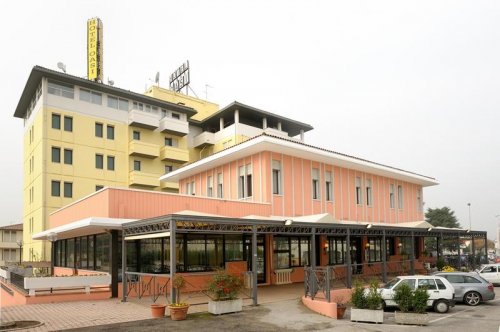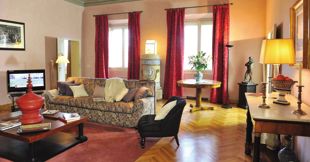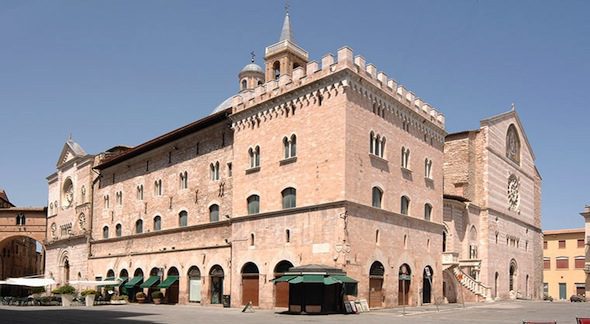
Two hotel properties in central Foligno, 24 currently compliant rooms, a bar, parking and common areas. The hotel business operated by Centro Hotel S.r.l., within Bankruptcy Proceeding No. 28/2018 before the Court of Spoleto, has reached its eleventh sale attempt with an asking price of €22,453 and bids due by 27 October 2026. Yet the auction price is probably the least important number in the transaction: the buyer of the operating business does not automatically acquire the right to continue using the properties. New hotel leases will have to be negotiated separately. And if the new rent structure is too aggressive, the entire investment case can deteriorate very quickly.
In the hotel investment market, some of the most interesting distressed opportunities are those where the headline acquisition price and the true economic cost of the investment are radically different.
Foligno is almost a textbook example.
Within Bankruptcy Proceeding No. 28/2018 before the Court of Spoleto, concerning Centro Hotel S.r.l., a hotel business unit is being offered for sale in connection with two hospitality properties located in the city centre.
The available documentation refers to a total of 24 rooms currently considered compliant for operation, together with a bar, private parking and common areas.
The current process represents the eleventh sale attempt.
The asking price is:
€22,453
with bids due by 12:00 noon on 27 October 2026.
At first glance, this may look like the acquisition of a small hotel platform at an almost nominal price.
That would be the wrong conclusion.
To understand the transaction properly, four elements need to be separated:
the operating business;
the real estate;
the lease agreements;
the future management model.
The real value sits in the interaction between those four components.
This Is Not the Purchase of Two Hotels
This is the first point that needs to be made clear.
The procedure concerns a hotel operating business.
It does not include ownership of the two underlying properties.
More importantly, the successful bidder will not automatically step into the existing real estate lease agreements.
The new operator will need to negotiate separately with the relevant property owners in order to secure the right to continue operating from the current premises.
That fundamentally changes the nature of the deal.
The buyer is not acquiring:
two hotels for €22,453.
The buyer is acquiring:
a hotel operating business for €22,453 whose value can only be preserved if economically sustainable access to the two properties is secured at the same time.
That is a very different proposition.
The Business Is Far More Dependent on the Real Estate Than the Auction Price Suggests
In hospitality, the relationship between the operating business and the real estate is particularly strong.
Goodwill is influenced by:
location;
number and configuration of rooms;
accessibility;
parking;
reputation;
licences;
demand generated by the location;
physical characteristics of the property.
For this reason, a hotel operating business is not fully interchangeable with the building from which it trades.
The valuation report prepared for the procedure itself noted that relocating the business elsewhere would not reasonably guarantee preservation of the same goodwill or the same economic performance.
A relocation would also require additional investment.
The value of the operating business is therefore closely linked to the ability to continue trading from the existing properties.
That is why the future lease structure becomes critical.
In 2023, the Business Was Valued at €124,176.50
The valuation report, based on conditions as of 31 December 2023, assessed the value of the hotel business at:
€124,176.50.
The valuation was based on an unlevered income approach using a 15.94% WACC.
Among the key assumptions were:
24 rooms;
ADR of €65.80 excluding VAT;
average occupancy of 65.5%;
365 operating days;
theoretical annual revenue of approximately €374,437;
estimated gross operating contribution of approximately €81,644;
theoretical net margin of approximately €58,115.
Today, the asking price has fallen to €22,453.
The comparison is striking:
€124,176.50 → €22,453.
But concluding that the business is now available at a major discount would still be incomplete.
Because one assumption in the 2023 valuation matters far more than the auction price itself.
The Critical Number in the Old Valuation: €10,500 of Annual Property Rent
The economic model used by the valuer assumed a total annual cost for the use of the two hotel properties of only:
€10,500 per year.
This may be the most important figure in the entire analysis.
Because the theoretical profitability of the business was built partly on that cost base.
The future buyer, however, has no certainty that the same lease terms can be preserved.
The leases will need to be renegotiated.
This means that the historic value of €124,176.50 cannot simply be transferred to a new investor.
The new rent needs to be understood first.
The Rent Threshold That Could Destroy the Deal
This is the most important financial issue in the transaction.
Every additional euro of property rent that is not offset by higher revenue or improved operating efficiency directly reduces the profitability of the OpCo.
The logic is simple.
If the normalised operating business produces:
GOP available before rent = X
and the new total rent becomes:
Rent = Y
the amount available to remunerate capital and risk becomes:
X − Y − CAPEX − other non-operating costs.
The question is therefore not whether a rent level looks “high” or “low” in absolute terms.
The real question is:
how much of the GOP does it absorb?
If rent increases by €20,000 with no corresponding improvement in operating performance, profitability effectively falls by the same amount.
If it rises by €40,000, the erosion becomes even more severe.
At some point, a business that appears profitable can become economically uninvestable.
The maximum sustainable rent therefore needs to be identified before a definitive value is assigned to the operating business.
The Auction Price Is Only One Component of the Initial Investment Requirement
The real investment is not:
€22,453.
It is more accurately:
purchase price of the business
buyer’s premium and acquisition costs
landlord deposits and guarantees
CAPEX
working capital
reopening or transition costs
commercial and technology investment.
That total represents the true:
Initial Investment Requirement.
The investment return should be calculated on that number.
Not on the €22,453 auction price.
This is the same principle applied in transactions analysed by Investhotel Capital Partners: the entry price is only one component of the capital actually required to make a hospitality operation investable.
Fair Rent Should Be Derived from the Business Plan
Negotiations with the property owners should not begin with the theoretical value of the real estate.
They should begin with the cash flow capacity of the hotel operation.
The correct sequence is:
Revenue
→ Normalised GOP
→ CAPEX
→ Working Capital
→ Minimum Operator Return
→ Fair Rent
Not:
Property Value → Landlord Target Yield → Rent → Subsequent Test of Sustainability.
The second approach is one of the most common causes of stress in hotel lease structures.
A property may have a certain capital value.
But if the rent implied by that valuation cannot be supported by the hotel P&L, the problem is not solved by imposing the higher rent.
It is simply transferred to the operator.
The Main Risk Is Buying the Business Before Gaining Visibility on the Real Estate
This is where the transaction’s real asymmetry sits.
The business can be acquired.
The property arrangements still need to be negotiated.
A professional investor should therefore seek, subject to the limitations of the procedure, as much visibility as possible on:
identity of the property owners;
expected rent levels;
potential lease duration;
deposits and guarantees;
indexation;
termination rights;
landlord versus tenant CAPEX;
major maintenance obligations;
hotel-use restrictions;
renewal mechanics.
The goal is not necessarily to sign the leases before the acquisition.
It is to avoid buying an operating business without having a reasonable understanding of the real estate cost required to make it viable.
Two Properties, One Hotel Business
The valuation documentation describes the two properties as part of a single operating hotel business.
The perimeter includes the 24 compliant rooms, together with reception facilities, breakfast/bar areas, storage, offices, parking and meeting space.
The structure could theoretically create certain efficiencies through shared:
reception;
administration;
marketing;
revenue management;
distribution;
procurement;
staff coordination.
But operating across two properties can also create duplication and inefficiency.
The relevant question is therefore not simply:
“How much revenue can 24 rooms generate?”
It is:
“What does it actually cost to operate two properties in order to generate that revenue?”
The 24 Compliant Rooms May Not Represent the Full Potential Inventory
The available documentation refers to 12 currently compliant rooms in each of the two properties.
The valuation report also mentions additional rooms that were not included in productive capacity at the time because they lacked the necessary occupancy certification.
This creates two possible scenarios.
The negative one:
additional investment, technical works or authorisations may be required.
The positive one:
part of that inventory could potentially be recovered.
But that upside should not be priced into the transaction before it has been verified.
The analysis should first confirm:
planning compliance;
occupancy certification;
fire safety;
building systems;
authorisations;
required CAPEX;
time needed for regularisation.
Only then should additional rooms be incorporated into the business plan.
Technical and Legal Due Diligence Becomes Part of the Underwriting
In this transaction, due diligence is not an ancillary cost.
It is part of price formation.
At minimum, an investor needs to verify:
licences;
operating permits;
occupancy certification;
planning compliance;
fire-safety compliance;
building systems;
accessibility;
health authorisations;
contracts;
employees;
litigation;
equipment;
furniture and fixtures;
maintenance condition.
Further analysis on hotel valuations, contracts, management, distress situations and due diligence is available through the specialist guides published on Robertonecci.it.
In this case, legal and technical due diligence is not a formality.
It directly affects value.
The 2023 Numbers Need to Be Fully Normalised for 2026
The valuation report reflects conditions as of 31 December 2023 and relies on projections for subsequent periods.
In 2026, those figures are a historical reference.
Not a business plan.
A new investor should rebuild from scratch:
current ADR;
occupancy;
RevPAR;
corporate/leisure mix;
OTA contribution;
direct-booking performance;
payroll;
utilities;
distribution costs;
maintenance;
F&B;
new property rent.
The target is not an optimistic top-line forecast.
It is a normalised GOP.
The new lease structure must then be built around that GOP.
The quality of hotel management therefore becomes a critical variable: pricing, distribution, organisation and cost control can materially change the asset’s capacity to support rent.
Eleven Sale Attempts Do Not Simply Mean “Deep Discount”
The current procedure has reached its eleventh sale attempt.
That fact deserves careful interpretation.
A progressively lower price may create opportunity.
But eleven attempts also indicate that the market has repeatedly struggled to find an acceptable balance between:
price
and
risk.
That is valuable information.
When an asset repeatedly fails to find a buyer, the right question is not simply:
“How far has the price fallen?”
It is:
“Which problem remains unresolved?”
In Foligno, the most obvious candidate is the relationship between the hotel business and access to the underlying properties.
PropCo and OpCo Need to Become Economically Compatible Again
Foligno is also a useful example of the separation between:
PropCo
and
OpCo.
The properties remain with their respective owners.
The operating business can move to a new owner.
That separation can work perfectly well.
But only if the required returns on both sides are economically compatible.
The PropCo needs a return consistent with real estate risk.
The OpCo needs sufficient cash flow to remunerate:
management;
working capital;
CAPEX;
operating risk;
invested capital.
If the landlord captures too much value through rent, the OpCo becomes fragile.
And a fragile OpCo ultimately damages the PropCo as well.
The optimal rent is therefore not the highest amount the landlord can extract.
It is the rent that maximises the probability of sustainable value creation for both sides.
The Five Conditions That Would Make Foligno Truly Investable
1. Lease Visibility Before Significant Capital Is Committed
The operator needs sufficient clarity on rent, duration and key terms for both properties.
2. Fair Rent Consistent with GOP
Rent should be derived from the economic capacity of the hotel business, not from the nominal value of the real estate.
3. CAPEX Under Control
The cost required to preserve or restore full operating capacity needs to be quantified before the investment decision.
4. Clear Regulatory Perimeter
Licences, occupancy certification and compliance requirements must support operational continuity without creating disproportionate risk.
5. Additional Room Upside Considered Only After Verification
Potential additional inventory may represent future value, but it should not be paid for today until it is technically achievable.
If these five conditions are satisfied, €22,453 may represent an attractive entry point.
If they are not, even €22,453 may be too much.
Three Scenarios Should Be Modelled Before Assigning Value to the Business
A professional underwriting exercise should include at least three cases.
Downside Case
Materially higher rent than historical assumptions, weak occupancy, significant CAPEX and no recovery of additional rooms.
This case measures potential cash burn and liquidity requirements.
Base Case
24 rooms, ADR and occupancy updated to 2026 market conditions, normalised staffing, sustainable leases and ordinary CAPEX.
This is the scenario on which the investment decision should be built.
Upside Case
Improved revenue management, higher direct-booking contribution, recovery of additional inventory, cost efficiencies and stronger commercial positioning.
This is the value-creation scenario.
Across all three cases, the sequence should remain:
Revenue → GOP → Rent → CAPEX → Working Capital → Return on Invested Capital.
Only then does the business purchase price become meaningful.
Foligno Shows Why the Auction Price May Be the Least Important Number
The number that captures attention is:
€22,453.
But a professional hotel investor should focus on other variables:
24 compliant rooms;
new property rent;
lease duration;
ADR;
occupancy;
GOP;
CAPEX;
working capital;
potential recoverable inventory.
The business purchase price is only the entry ticket into the transaction.
The real investment comes afterwards.
That is precisely why distressed hospitality transactions need to be analysed differently from conventional acquisitions.
Conclusion: The Real Deal Is Rebuilding the Balance Between Business and Real Estate
Foligno is not simply a bankruptcy sale priced at €22,453.
It is a hospitality special situation in which the value of the business depends on the ability of the new investor to rebuild, at the same time:
operational continuity;
property leases;
profitability;
CAPEX discipline;
governance.
The price has already fallen substantially.
But a lower purchase price does not automatically solve the industrial problem.
The real opportunity exists only if the new operator can negotiate a fair rent, restore the operation to a sustainable GOP and generate an acceptable return on the total capital actually invested.
The final question is therefore not:
“Is it worth buying a hotel business for €22,453?”
It is:
“At what rent, with what CAPEX and at what sustainable GOP can these 24 rooms create value again?”
That is the question that separates an opportunistic purchase from a genuine turnaround transaction.
Because in distressed hospitality, returns do not simply come from buying at a discount.
They come from solving better than everyone else the problem that created the discount in the first place.
InvestimentiAlberghieri.it Advisory
InvestimentiAlberghieri.it analyses acquisitions, disposals, business leases, property leases, turnarounds, restructurings and repositioning opportunities across hospitality assets, including insolvency procedures and hospitality special situations.
For preliminary assessments, business plans, valuations, due diligence, rent-sustainability analysis, operator searches and hospitality transaction structuring:
info@investimentialberghieri.it
Complementary expertise and insights:
Robertonecci.it — hospitality advisory, analysis and specialist guides
Investhotel.it — hotel acquisitions, disposals and hospitality transactions
HotelManagementGroup.it — hotel management, asset management and performance optimisation