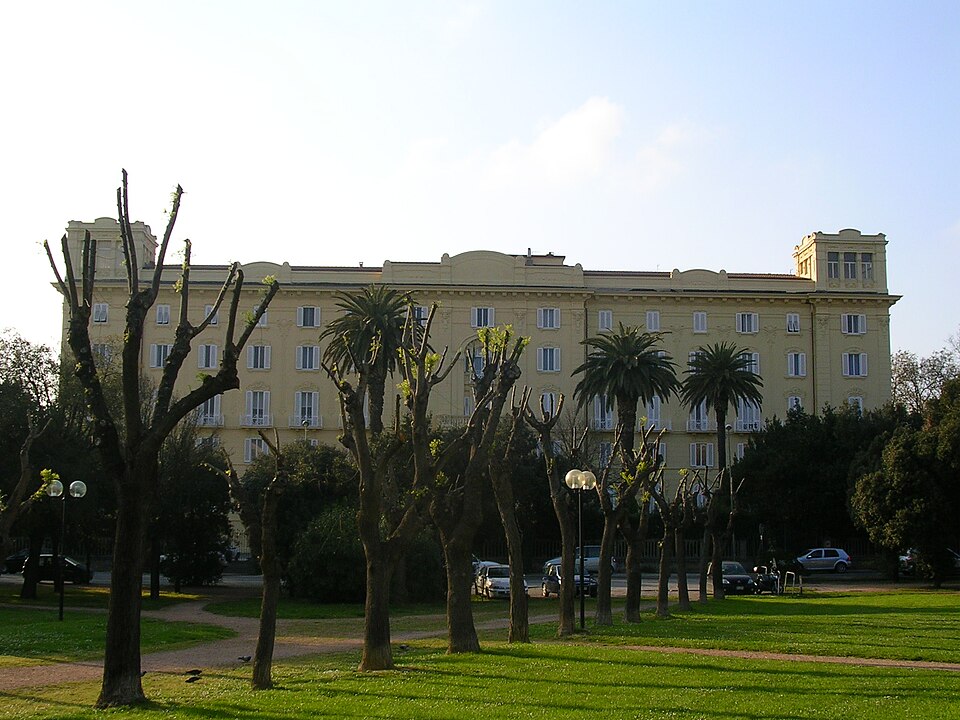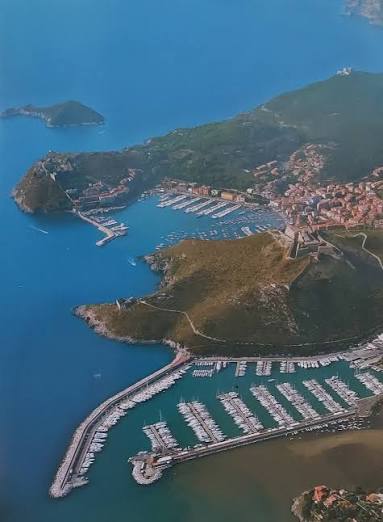
The Municipality of Monte Argentario is bringing the former elementary school on Lungomare Andrea Doria back to market with a reserve price of €6.2 million. But the decisive condition lies elsewhere: the property must be converted into a hotel and retain that use for at least fifty years. For an investor, the key issue is therefore not simply acquiring the asset, but determining what type of hotel can support the acquisition cost, CAPEX, debt service and required return on capital.
€6.2 million is the entry price.
It is not the total investment cost.
And, above all, it is not yet the value of the opportunity.
The former elementary school in Porto Ercole, located on Lungomare Andrea Doria, represents a particularly interesting hospitality real estate case because the future purchaser will not have full flexibility over the property's ultimate use.
Under the terms reported in the local press, the Municipality of Monte Argentario imposes a clear requirement:
the property must be used as a hotel for at least 50 years.
Alternative non-hotel accommodation formats are excluded, as is the creation of independent residential units equipped with kitchens and bathrooms.
Hospitality is therefore not simply one possible scenario.
It is the economic premise of the entire transaction.
That is precisely what makes the opportunity particularly relevant for InvestimentiAlberghieri.it.
The question is not merely:
“What is the property worth?”
The correct question is:
“What hotel project can generate an adequate return on the total capital invested while complying with a fifty-year hospitality use restriction?”
The Asset: €6.2 Million and a Predetermined Use
The property consists of the former elementary school in Porto Ercole, owned by the Municipality of Monte Argentario since 1887.
It extends over three levels, and the lot also includes a storage building, a garage and the related external areas.
The technical report referred to by the local press describes deteriorated surfaces and window frames, together with building systems that are no longer aligned with current standards.
The property does not appear to be subject to a formal listed-building restriction, although a landscape protection constraint remains in force.
The new procedure reportedly provides for:
-
reserve price: €6,200,000;
-
bids equal to or above the reserve price;
-
validity of the process even if only one bid is submitted;
-
provisional guarantee: €310,000;
-
60-day tender period;
-
submission of the development project within one year of completion of the sale;
-
mandatory hotel use for at least 50 years;
-
prohibition on resale before completion of the redevelopment;
-
specific obligations and guarantees intended to ensure delivery of the project.
According to the published terms, completion of the sale is expected by 30 September 2027, following vacation of the property, with the possibility of an extension.
The Most Important Number Is Not €6.2 Million
The acquisition price is immediately visible.
The rest of the investment is not.
An investor should build the model around:
Acquisition Cost
-
taxes and transaction costs
-
design and professional fees
-
demolition and enabling works
-
structural works
-
MEP systems
-
guestrooms and bathrooms
-
common areas
-
F&B
-
potential wellness facilities
-
FF&E
-
OS&E
-
professional fees
-
contingency
-
financing costs
-
pre-opening expenses
-
working capital
Only then does the real:
Total Investment Cost
become visible.
That is the denominator against which the following should be assessed:
-
Return on Cost;
-
IRR;
-
DSCR;
-
break-even point;
-
equity return;
-
stabilised value.
This is the same principle applied in the analysis developed by Investhotel.it:
an attractive real estate entry price does not automatically result in an attractive hotel investment.
The 50-Year Restriction Reduces Optionality
Under normal circumstances, a real estate investor retains some ability to reconsider the future use of an asset over time, subject to planning regulations.
Hotel.
Residential.
Serviced apartments.
Senior living.
Student housing.
Office.
Mixed-use.
In Porto Ercole, that optionality is significantly reduced.
The buyer is effectively accepting a specific investment thesis:
this property must create value through hospitality.
That condition has a direct impact on underwriting.
It reduces the value of alternative future uses and increases the importance of the hotel's operating performance.
Fifty Years Means Multiple Economic Cycles
A fifty-year use restriction cannot be analysed through a five-year business plan alone.
Fifty years means exposure to:
-
multiple economic cycles;
-
changes in interest rates;
-
tourism downturns;
-
new distribution models;
-
shifts in demand;
-
new competitors;
-
repeated CAPEX cycles;
-
technological obsolescence;
-
regulatory change.
The investor is therefore not merely acquiring a building.
It is committing to a very long-term hospitality strategy.
That makes the quality of the initial concept even more important.
What Type of Hotel Can Actually Work in Porto Ercole?
The answer must begin with the market, not the building.
A feasibility study should assess, at a minimum:
-
luxury demand;
-
international leisure demand;
-
domestic demand;
-
average length of stay;
-
seasonality;
-
competitive ADR;
-
achievable occupancy;
-
shoulder-season demand;
-
direct competitors;
-
yachting and marine-related demand;
-
F&B demand;
-
events;
-
potential for season extension.
The real issue is not whether a hotel in Porto Ercole can be full in August.
The real issue is:
how much EBITDA can it generate on a full-year basis?
Seasonality Is the Real Stress Test
A highly seasonal hotel must generate, within a relatively short operating period, enough cash flow to cover:
-
payroll;
-
maintenance;
-
utilities;
-
distribution;
-
marketing;
-
property costs;
-
management costs;
-
debt service;
-
CAPEX reserve;
-
equity returns.
A high peak-season ADR may appear extremely attractive.
But if annualised occupancy remains too low, the capital invested may not generate an adequate return.
The real question therefore becomes:
ADR × Occupancy × Inventory = sufficient revenue to support the Total Investment Cost?
And:
How long must the effective operating season be in order to achieve stabilised EBITDA consistent with the acquisition cost and CAPEX?
Luxury, Upscale or Lifestyle?
The destination may instinctively suggest a luxury positioning.
But luxury is not an aesthetic choice.
It is a capital allocation decision.
It typically requires higher:
-
space per key;
-
material specifications;
-
FF&E;
-
common-area allocation;
-
F&B investment;
-
wellness provision;
-
staffing ratios;
-
operating costs;
-
pre-opening costs;
-
CAPEX per room.
The ADR premium must compensate for all of this.
An investment committee should therefore compare at least three configurations.
Scenario A — Upscale
More controlled CAPEX, higher room density and a more efficient operating structure.
Scenario B — Luxury
Fewer keys, more space per room, a more complex service proposition and potentially materially higher ADR.
Scenario C — Lifestyle / Upper Upscale
Strong product identity, with integration between rooms, F&B, outdoor areas and the destination.
The correct strategy is not necessarily the most prestigious one.
It is the one that delivers the strongest relationship between:
CAPEX → EBITDA → Return on Cost → Stabilised Value
Concept First, Room Count Second
The question:
“How many rooms can we fit?”
comes too early.
The number of guestrooms should be a consequence of the positioning.
A luxury hotel requires more square metres per key.
A lifestyle hotel requires meaningful common areas.
A more efficient operating model may seek to maximise room inventory.
The correct development sequence is:
Market → Positioning → Concept → Space Programme → Keys → ADR → Occupancy → EBITDA → CAPEX → Value
Not:
Floor Area → Maximum Number of Rooms → Business Plan
The Critical Ratio Is CAPEX to EBITDA
The property requires substantial redevelopment.
In any hotel development, CAPEX must be linked directly to future earnings capacity.
If Total Investment Cost increases, at least one or more of the following must also improve:
-
ADR;
-
occupancy;
-
RevPAR;
-
ancillary revenue;
-
GOP margin;
-
stabilised EBITDA;
-
terminal value.
Otherwise the project may be architecturally impressive but financially weak.
That is the difference between hotel development and simple real estate refurbishment.
Feasible Does Not Necessarily Mean Bankable
A project can be technically feasible and still fail to qualify as financially bankable.
For that reason, a Porto Ercole investment case should also be tested against:
-
Loan to Cost;
-
prospective Loan to Value;
-
DSCR;
-
Interest Coverage;
-
debt yield;
-
stabilised EBITDA;
-
break-even occupancy;
-
equity requirement;
-
IRR;
-
exit value.
Banks do not finance a destination.
They finance cash flow.
This is where Investhotel.it becomes central to the financial assessment of the project.
Ownership and Operations: The Contract Changes the Value
Once the product has been defined, the operating model must also be determined.
The main alternatives include:
Direct operation — maximum control but full exposure to operating risk.
Management agreement — the investor retains capital ownership and economic risk while an experienced operator manages the hotel.
Franchise — access to brand and distribution with greater operational independence.
Lease — transfer of a significant portion of operating risk to the tenant through a sustainable rent structure.
In this area, HotelManagementGroup.it focuses on the relationship between ownership, operator and performance.
Because the operating contract does not come after the business plan.
It is part of the business plan.
Under a Lease Model, Rent Must Be Derived from Hotel Economics
Rent cannot be determined by starting with the property owner's desired yield.
The correct sequence is:
Revenue → GOP → Operating EBITDA → Fixed Charges → Sustainable Rent
Only then can sustainable rent be compared with the return required by the owner.
If the two figures do not align, the solution is not to assume that the operator should simply pay more.
It means that one or more other assumptions are wrong:
-
acquisition cost;
-
CAPEX;
-
positioning;
-
financing;
-
target return.
It is a simple principle, but one that is frequently ignored.
The Municipality Protects the Use. The Investor Must Protect the Return.
The public-sector rationale behind the transaction is clear.
The Municipality wants the property to contribute to the quality and depth of Monte Argentario's tourism offer and does not want the asset to be acquired only to be converted later into a more profitable alternative real estate use.
The fifty-year restriction protects that function.
For the investor, however, that restriction has an economic cost.
The two objectives must therefore coexist within the same business plan:
territorial policy + investment sustainability
If either side of that equation fails, the project becomes fragile.
The Cost of Getting It Wrong Is Significant
The reported terms include material penalty mechanisms.
A resale before completion of the redevelopment would reportedly trigger a €3.5 million penalty.
Additional penalties are also indicated for delays and breaches of contractual obligations.
Timing risk therefore becomes an integral component of development risk.
An investor should incorporate into the model:
-
realistic permitting timelines;
-
permitting contingency;
-
construction contingency;
-
cost inflation;
-
financing carry;
-
potential pre-opening delays.
In a project of this kind, time is not merely an operational issue.
It is capital.
Value Cannot Be Determined Without CAPEX
The price is known:
€6,200,000
But the economic value of the investment cannot be established without understanding:
-
usable floor area;
-
structural condition;
-
internal configuration;
-
landscape restrictions;
-
building systems;
-
fire safety;
-
energy standards;
-
realistic number of keys;
-
F&B areas;
-
potential wellness facilities;
-
back-of-house requirements;
-
outdoor areas;
-
FF&E;
-
pre-opening requirements.
Only then is it possible to estimate:
CAPEX per Key + Total Investment Cost + Stabilised EBITDA + Stabilised Value
Any valuation before that point would be incomplete.
The Core Question: Maximum Bid Price
This is where a serious investment case must ultimately arrive.
The reserve price is €6.2 million.
But the reserve price is not necessarily the price an investor should be prepared to pay.
The Maximum Bid Price should be derived backwards.
The logic is:
Stabilised EBITDA
→ Stabilised Value
→ less CAPEX
→ less Soft Costs
→ less Financing Costs
→ less Contingency
→ less Target Developer / Investor Return
= Maximum Sustainable Acquisition Price
That is the correct framework.
If the outcome is above the reserve price, there may be economic room to compete.
If it broadly matches the reserve price, the opportunity may already be close to its investment threshold.
If it falls below the reserve price, the issue is not whether Porto Ercole is an attractive destination.
The issue is that the numbers do not support the price.
An Investment Committee Framework
An institutional investor would likely structure the analysis as follows:
Phase 1 — Asset Screening
Property, tender documentation, restrictions, timing.
Phase 2 — Market Feasibility
Demand, competitors, seasonality, ADR.
Phase 3 — Concept
Category, keys, F&B, wellness, outdoor areas.
Phase 4 — CAPEX
Detailed cost plan and contingency.
Phase 5 — Operating Model
Independent, branded, franchise, management or lease.
Phase 6 — Financial Model
Revenue, GOP, EBITDA, break-even.
Phase 7 — Capital Structure
Equity, debt, LTC, DSCR.
Phase 8 — Valuation
Stabilised value and Maximum Bid Price.
Only then:
BID / NO BID
Porto Ercole Is Also a Case Study in Hotel Policy
In many Italian destinations, the opposite dynamic is taking place.
Hotels converted into residential.
Hotels converted into student housing.
Hospitality losing out to alternative real estate uses.
In Porto Ercole, the Municipality is attempting to preserve the hotel function by imposing it on private capital.
This creates an interesting case at the intersection of:
territory + tourism + capital + permitted use
On Robertonecci.it, this relationship is one of the core themes in analysing the evolution of Italy's hospitality real estate stock.
The challenge is to find the correct balance.
Protecting hospitality may make strategic sense.
But private capital will only enter if the return is sustainable.
Conclusion: €6.2 Million Is Not the Question. It Is Only the First Number.
The Municipality has already chosen the use.
The investor must now demonstrate that the selected use can create value.
The real equation is:
€6.2 million
-
CAPEX
-
Financing Cost
-
Development Risk
-
Operating Risk
= Total Capital Invested
Against:
ADR
× Occupancy
× Keys
-
Ancillary Revenue
→ GOP
→ EBITDA
→ Stabilised Value
If the two sides of the equation generate an adequate return, Porto Ercole can become an attractive investment.
If they do not, the prestige of the destination is not enough.
The real investment case is therefore not:
“Former school offered at €6.2 million.”
It is:
“What is the Maximum Bid Price that allows this property to become a financially sustainable hotel for the next fifty years?”
That is the question that should come before any bid.
InvestimentiAlberghieri.it | Advisory
InvestimentiAlberghieri.it analyses hotels, hospitality assets and development projects for investors, owners, operators, banks and family offices.
Our work may include:
-
investment screening;
-
hotel feasibility studies;
-
highest and best use analysis;
-
business planning;
-
CAPEX analysis;
-
hotel development analysis;
-
lease vs management assessment;
-
financial modelling;
-
debt sizing;
-
DSCR analysis;
-
break-even analysis;
-
scenario analysis;
-
stabilised value;
-
Maximum Bid Price.
Price is the starting point.
Cash flow determines what an investor can actually afford to pay.
📩 info@investimentialberghieri.it
Ecosystem:
InvestimentiAlberghieri.it — Hospitality Real Estate & Investment Advisory
Investhotel.it — Hotel Finance, Debt & Investment Strategy
HotelManagementGroup.it — Hotel Operations, Management & Performance
Robertonecci.it — Hospitality Industry, Strategy & Market Analysis
Editorial and Legal Disclaimer
Information relating to the reserve price, duration of the procedure, intended hotel use, guarantees and terms referred to in this article is based on publicly available information concerning the new disposal process for the former school in Porto Ercole as of 12 October 2026.
Any investment decision should be based exclusively on the complete official tender documentation and supported by independent legal, planning, technical, landscape, tax, financial and commercial due diligence.
Any discussion of hotel category, concept, operating structure, CAPEX, financing, returns or Maximum Bid Price represents professional analytical scenarios only and should not be interpreted as describing approved projects or decisions already taken by the Municipality or prospective investors.