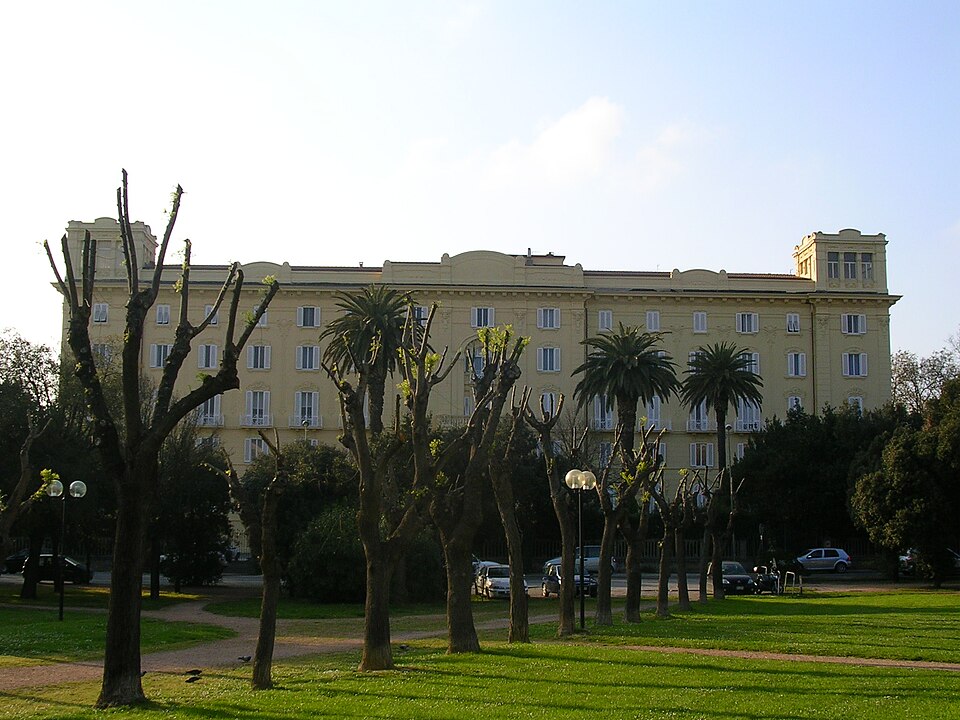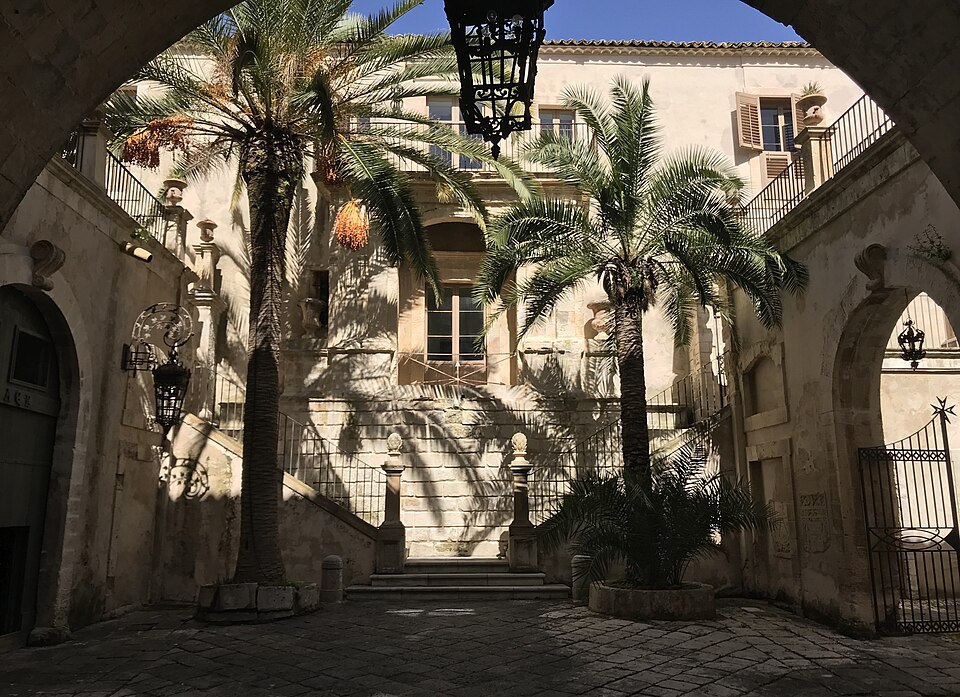
Rocco Forte Hotels is opening in Noto inside an 18th-century neoclassical palazzo. The financing does not come from an international real estate fund, but from Italy’s cooperative banking system: BCC Banca Iccrea, in a lending pool with BCC di Pachino and supported by dedicated CDP funding. Behind the €15 million facility lies a much broader lesson: a hotel project becomes bankable when the property, product, operator, CAPEX and development timetable all tell the same story.
The transaction
BCC Iccrea Group, through its parent company BCC Banca Iccrea, together with Banca di Credito Cooperativo di Pachino, has completed a €15 million financing facility for Rocco Forte Hotels.
The financing will support the refurbishment and subsequent opening of Palazzo Castelluccio in Noto, in the province of Syracuse.
Built in 1782, the palazzo will be transformed into a luxury boutique hotel featuring:
-
31 suites;
-
restaurant;
-
bar;
-
spa;
-
gym;
-
event and meeting spaces;
-
garden.
Palazzo Castelluccio will become Rocco Forte Hotels’ third property in Sicily, following Villa Igiea in Palermo and Verdura Resort in Sciacca.
But the most interesting detail is not the room count.
It is where the debt comes from.
BCC Iccrea explicitly linked the transaction to its commitment to tourism and to dedicated funding provided by Cassa Depositi e Prestiti — CDP.
That matters.
Hotel redevelopment financing in Italy does not necessarily have to come exclusively from private equity, real estate funds or major international investment banks.
It can also be structured through:
cooperative banking + a local lender + institutional funding.
For anyone currently trying to finance a hospitality project in Italy, that may be the most important aspect of the entire transaction.
The product: 5,000 square metres for just 31 suites
Palazzo Castelluccio extends over approximately 5,000 square metres.
It was built in 1782 for the Marchese di Lorenzo del Castelluccio and is one of the largest aristocratic residences in the Val di Noto.
Unlike the predominantly Baroque architecture for which Noto is famous, the palazzo is principally neoclassical in character.
Historically, it contained around 105 rooms, including:
-
a music room;
-
chapel;
-
ballroom;
-
large reception rooms.
Under the new hospitality concept, those 105 historic rooms become just 31 suites.
That is not a loss of capacity.
It is exactly what happens when a historic building is converted into a genuine contemporary luxury hotel.
The interiors are being developed by Olga Polizzi, Deputy Chairman and Director of Design at Rocco Forte Hotels, together with architects Paolo Moschino and Philip Vergeylen.
The project also forms part of the group’s wider pipeline of new Italian openings.
The opening date: why we use mid-2027 for the financial analysis
Public sources currently indicate two different opening timelines.
The group’s official website has referred to 2026.
The communication issued in connection with the financing instead points to mid-2027.
For the purposes of this financial analysis, we use mid-2027 as the working assumption because it is the date contained in the communication directly associated with the financing transaction and is therefore the more relevant reference point for the debt timetable.
That does not necessarily mean that the earlier 2026 indication was incorrect.
It means that when assessing the sustainability of the financing, the relevant timetable is the one used to structure:
-
drawdowns;
-
grace period;
-
opening;
-
ramp-up;
-
first ordinary debt-service payments.
The hotel development timetable and the financing timetable need to match.
Why Palazzo Castelluccio is bankable
At InvestimentiAlberghieri.it we have recently analysed a series of major Italian hotel redevelopment cases.
The Portofino Kulm shows how time can become the dominant risk in a hospitality investment.
Sammezzano demonstrates that, in some trophy assets, hotel rooms are not the correct economic denominator: heritage, museum use, events and hospitality need to be analysed as part of a single revenue ecosystem.
Marinella di Nervi highlights tenure risk: duration, legal structure and residual value can matter more than the headline acquisition price.
Busca Thedy in Gressoney illustrates the need to align real estate scale with commercial seasonality.
And the Grand Hotel Campo dei Fiori in Varese introduces external dependency risk, where accessibility and infrastructure sit outside the investor’s direct control.
Palazzo Castelluccio is almost the reverse case.
Here we have a project that has already secured bank financing.
So the relevant question becomes:
why?
The answer is not that the building is beautiful.
It is that uncertainty has been progressively reduced.
Much of the structural risk had already been absorbed
Following the death of the last Marchese di Castelluccio in 1981, the palazzo entered a long period of decline.
It later passed to the Order of Malta.
In 2011 it was acquired by French television producer Jean-Louis Remilleux, who launched a major restoration programme led by local architect Corrado Papa.
At the time, the building was in extremely poor condition.
The restoration took several years.
The programme included:
-
structural consolidation;
-
new building services;
-
restoration of frescoes;
-
recovery of historic floors;
-
reproduction of original wallpapers;
-
restoration of fabrics and decorative elements.
In 2018, Palazzo Castelluccio reopened to the public as an inhabited house museum.
This leads to the first major financing lesson of the case.
A restored historic property is far easier to finance than an unrestored building whose future value still depends on unresolved technical risk.
Rocco Forte is not starting with a property where it still needs to establish whether:
-
the structure is sound;
-
floors require reconstruction;
-
major water ingress exists;
-
all MEP systems need to be replaced;
-
decorative restoration conceals additional structural issues.
A meaningful part of the technical risk has already been absorbed by the previous restoration.
The remaining CAPEX is not necessarily small.
But it is considerably more measurable.
And banks find measurable risk much easier to underwrite.
Bankability begins with reducing uncertainty
The principle extends far beyond Noto.
Banks do not finance architectural renderings.
They finance a sequence of risks that they believe can be identified, measured and sufficiently controlled.
When a hotel project reaches a credit committee, the lender needs to understand with reasonable confidence:
-
what already exists;
-
what still needs to be built;
-
how much it will cost;
-
when it will be completed;
-
who will operate it;
-
which market it will serve;
-
what ADR it can support;
-
what cash flow it may generate;
-
how the debt will be repaid.
The more open those variables remain, the closer the project moves towards equity risk.
The more clearly they are defined, the greater the potential role for debt.
This is one of the central principles behind the advisory work described at Investhotel.it: it is not enough for a project to appear potentially profitable.
It needs to be underwritable.
161 square metres per key: the number that explains luxury
Five thousand square metres.
Thirty-one suites.
That produces a ratio of approximately:
161 gross square metres per key.
It is an important benchmark.
Purely indicatively, an economy hotel might operate at around:
35–45 gross sq m per key.
A strong four-star hotel:
60–70 sq m.
An urban five-star:
90–110 sq m.
In true luxury hospitality, however, space allocation increases materially.
A range of approximately 130–170 gross sq m per key is not unusual when the product includes:
-
substantial suites;
-
spa;
-
destination restaurant;
-
bar;
-
meeting space;
-
gardens;
-
salons;
-
library;
-
back of house;
-
extensive guest services.
This is where many Italian development projects make their first mistake.
They attempt to create a luxury hotel using the spatial efficiency of an upscale property.
The result is not a more efficient luxury hotel.
It is often a product that lacks the physical quality required to sustain the ADR on which the business plan depends.
From 105 rooms to 31 suites
The comparison with the building’s historic configuration is even more revealing.
Approximately 105 original rooms become 31 contemporary suites.
That is a ratio of roughly:
3.4 to 1.
It is strikingly similar to what we observed at the Grand Hotel Campo dei Fiori, where around 200 historic rooms are being translated into a modern concept of approximately 65 keys.
This is not a universal mathematical rule.
But it is a useful indicator.
Historic European buildings often experience a significant reduction in original room count when converted into contemporary high-end hotels.
Anyone valuing these properties on the basis of their historic number of rooms therefore risks materially overstating future accommodation capacity.
The theoretical operating model
Let us build a simple analytical scenario.
This is not Rocco Forte Hotels’ business plan, which is not publicly available.
It is an independent exercise by InvestimentiAlberghieri.it designed to understand the potential scale of the economics.
Assume:
-
31 suites
-
annualised occupancy of 50–55%
-
approximately 5,700–6,200 occupied room nights
-
ADR of €900–1,100
At the theoretical extremes, room revenue could fall between approximately:
€5.1 million and €6.8 million.
Using a more conservative central range:
€5.5–6.5 million of room revenue.
Additional revenue would come from:
-
F&B;
-
spa;
-
events;
-
meetings;
-
other ancillary activities.
Total revenue could therefore potentially fall within an indicative range of:
€8–10 million.
Under an efficient luxury operating model, a GOP margin of approximately 32–38% could imply GOP of roughly:
€2.6–3.8 million.
Depending on the operating and corporate structure, further deductions would then need to be considered for:
-
management fees;
-
corporate overhead;
-
insurance;
-
FF&E reserve;
-
below-GOP expenses;
-
other items required to reach EBITDA and actual cash flow available for debt service.
GOP and EBITDA should therefore not be used interchangeably.
But even without access to the actual business plan, one conclusion is reasonable.
The potential operating performance appears, in theoretical terms, compatible with a €15 million debt facility.
The actual debt-service coverage, however, depends on information that is not public:
-
interest rate;
-
maturity;
-
grace period;
-
amortisation profile;
-
covenants;
-
required DSCR;
-
guarantees;
-
equity contribution.
It is therefore not possible to calculate the effective debt-service coverage.
What we can understand is why the project was capable of reaching bank underwriting and financing close.
With only 31 suites, the project lives or dies on ADR
This is the critical operating point.
Thirty-one rooms is a very small inventory.
The hotel cannot compensate for weak pricing simply by driving substantially more volume.
With approximately 5,700–6,200 occupied room nights per year, every €100 movement in ADR represents approximately:
€570,000–620,000 of annual room revenue.
That is a very significant amount relative to the scale of the property.
This is why, in ultra-luxury hospitality, the brand is not simply a marketing line item.
It is part of the industrial model.
The brand affects:
-
distribution;
-
awareness;
-
customer database;
-
feeder markets;
-
reputation;
-
pricing power;
-
direct-demand generation.
At 31 suites, the ability to achieve the correct rate may matter more than gaining a few additional points of occupancy.
That is where Rocco Forte becomes part of the economics, rather than merely the name on the façade.
The financing stack is the real story
The structure behind the transaction deserves careful attention.
Rocco Forte Hotels is controlled by the Forte family and is also backed by the Public Investment Fund of Saudi Arabia, which holds a 49% stake.
That is the capital structure at group level.
The financing stack for the Noto project is different.
It is built around:
BCC Banca Iccrea
in a lending pool with
BCC di Pachino
supported by funding from:
CDP.
Those are two distinct levels of capital.
But viewed together, they explain why the deal is so instructive.
On one side:
an established international hotel sponsor + substantial equity backing.
On the other:
cooperative banking + a local lender + Italian institutional funding.
It says a great deal about how hotel financing in Italy is evolving.
You do not necessarily need a fund to finance a hotel
This may be the most useful lesson in the entire case.
For years, the narrative around Italian hotel investment suggested that significant hospitality projects could only be financed through:
-
private equity;
-
real estate funds;
-
major banking groups;
-
international institutional investors.
Palazzo Castelluccio demonstrates that the market is more nuanced.
Local cooperative banks can participate in significant hotel transactions.
Territorial lenders can enter lending pools.
Institutional funding can be channelled towards tourism.
Capital for quality hospitality does exist.
But it does not finance a generic concept of “a beautiful hotel”.
It finances a properly prepared investment case.
A bankable file requires:
verified asset.
valuation.
documented CAPEX.
defined product.
identified operator.
business plan.
credible development timetable.
equity.
debt-service capacity.
Capital comes after those elements are in place.
Sicily as a system, not a collection of hotels
There is also a second strategic reading of the transaction.
Palazzo Castelluccio is not simply Rocco Forte’s third Sicilian hotel.
The group is building destination coverage across the region.
Palermo provides the urban luxury proposition through Villa Igiea.
Sciacca provides the resort proposition through Verdura.
Noto adds historic heritage and south-eastern Sicily.
An international guest can therefore construct a multi-night itinerary across the island while remaining within:
-
the same brand;
-
the same distribution ecosystem;
-
the same service standards;
-
the same CRM environment;
-
the same commercial relationship.
This is not simply the accumulation of properties.
It is network economics.
Why this matters for Italian independents
A single independent hotel cannot easily replicate the distribution machine of an international group.
But it can replicate the logic behind it.
The answer does not necessarily have to be:
sell to a chain.
It can be:
build a network.
Independent hotels within the same destination can potentially share:
-
distribution;
-
CRM;
-
cross-selling;
-
standards;
-
international marketing;
-
multi-destination packages;
-
sales representation.
This principle also recurs in the hospitality analysis published on RobertoNecci.it.
Independent hotels do not necessarily need to surrender their identity.
They need to stop confusing independence with isolation.
Because in luxury hospitality, pricing power also comes from the ability to make one property part of a broader commercial ecosystem.
Palazzo Castelluccio completes the framework
The previous dossiers largely examined assets still searching for their economic formula.
Palazzo Castelluccio tells a different story:
a clearly defined product that selected the asset capable of delivering it.
That distinction may be the most important lesson of all.
The Portofino Kulm teaches investors to price time.
Sammezzano teaches them to choose the correct economic denominator.
Marinella di Nervi teaches them to assess the tenure before the building.
Busca Thedy shows why scale must match seasonality.
Campo dei Fiori shows why external variables outside the sponsor’s control should not automatically sit inside the base case.
Palazzo Castelluccio introduces the sixth variable: bankability.
It is not enough for an investment to create theoretical value.
It must be structured in a way that allows a lender to understand, measure and assume part of the risk.
Product first, property second
Rocco Forte did not simply acquire a large historic palazzo and then ask how it might be monetised.
The group already understands:
-
the segment;
-
the customer;
-
the pricing;
-
the product;
-
the distribution;
-
the positioning;
-
Sicily’s role within its broader network.
It therefore selected a property capable of delivering that strategy.
That sequence is the opposite of what frequently occurs in Italian hotel investment.
Too often, the process is:
see property → price looks attractive → acquire → decide what to do with it.
The more disciplined sequence is:
market → product → operating model → business plan → CAPEX → property → price.
That is also the methodology behind the advisory work described at Investhotel.it.
Because the purchase price of a property does not determine whether the investment is attractive.
The business plan determines how much capital the property can economically absorb.
What a bankable hotel financing package should contain
Palazzo Castelluccio therefore provides a practical checklist.
A hotel project approaching lenders should ideally contain at least the following.
Asset
Title, valuation, technical condition, restrictions and planning position.
CAPEX
Detailed budget, contingencies, FF&E, pre-opening and working capital.
Product
Room count, space allocation, services and positioning.
Market
Demand, competitors, ADR, occupancy and segmentation.
Operator
Brand, management agreement, lease or direct-management structure.
Profit and loss
Revenue, GOP, EBITDA and cash flow.
Financing
Equity, debt, drawdown structure, grace period and debt service.
Sensitivity analysis
What happens if:
-
ADR falls;
-
occupancy falls;
-
CAPEX rises;
-
opening is delayed;
-
interest rates increase.
Exit or asset value
What the stabilised property may ultimately be worth.
Only when these elements fit together does a project stop being a presentation.
It becomes a financing proposition.
Operations come before financing
A bank is financing an economic project.
Not an architectural concept.
That is why product definition, space planning, revenue management, management control and pre-opening — activities also developed through HotelManagementGroup.it — need to be designed before the lender is asked to assume risk.
The distinction is fundamental.
The business plan should not exist to justify a project that has already been decided.
It should help determine which project should be built.
Only after that should the financing structure be designed.
The lesson from Palazzo Castelluccio
The real news is not that Rocco Forte Hotels obtained €15 million.
The real news is why lenders were able to provide it.
The asset was understandable.
Technical risk had already been materially reduced.
The product was defined.
The scale was consistent with luxury positioning.
The operator was identified.
The market could be assessed.
The development timetable could be incorporated into a financing structure.
The pricing strategy was supported by an international distribution platform.
That combination turns a historic building into a bankable investment.
And this is the most important lesson for anyone who owns a hotel property, a historic building intended for hospitality conversion or a project that still needs to secure capital.
A bank does not need to fall in love with the building.
It needs to understand how its money will be repaid.
Everything else comes afterwards.
We will continue to follow Palazzo Castelluccio through to its anticipated opening, using mid-2027 as the current working timeline for this analysis.
The analysis does not end here
At InvestimentiAlberghieri.it we analyse hotel transactions, historic properties, closed hotels, M&A, insolvency situations and financing structures to understand what makes a hospitality project genuinely investable and bankable.
If you are preparing a financing request for a hotel project, or you own a property and need to build a package that a lender can actually underwrite, Investhotel.it outlines our advisory activities covering:
-
feasibility studies;
-
valuations;
-
due diligence;
-
CAPEX analysis;
-
business planning;
-
sensitivity analysis;
-
PropCo/OpCo structuring;
-
bankability analysis;
-
operating-model definition;
-
management agreements;
-
hotel leases;
-
preparation of the economic and financial investment package.
For the industrial component — product definition, positioning, space planning, USALI-based management control, revenue management, organisation, pre-opening and management selection — visit HotelManagementGroup.it.
Further professional hospitality analysis and publications are available at RobertoNecci.it.
Are you preparing to take a hotel project to a bank and want to know whether the investment case is genuinely bankable before you present it?
Contact info@investimentialberghieri.it for an initial assessment of CAPEX, the business plan, debt sustainability and transaction structure, and to discuss a potential advisory mandate.
Methodology and sources
This article has been prepared using publicly available information available as of the publication date, including communications from BCC Iccrea Group, ANSA, MilanoFinanza, BeBeez, Pambianco Hotellerie, Travelnostop, the official Rocco Forte Hotels blog, TTG Italia, Job in Tourism, Travel Quotidiano, Hotel Domani, Luxury Travel Advisor, the official Palazzo Castelluccio website, Sicilia Secrets, The World of Sicily and other publicly available sources concerning the property.
Public sources currently indicate different opening timelines. For the purposes of the financial analysis, mid-2027 is used as the working assumption because it is the date indicated in the communication associated with the financing.
The acquisition price, total project CAPEX, interest rate, maturity, grace period, amortisation profile, financial covenants and official business plan have not been publicly disclosed.
All figures relating to ADR, occupancy, room revenue, total revenue, GOP, EBITDA and theoretical debt-service capacity are independent analytical assumptions prepared by InvestimentiAlberghieri.it solely for analytical purposes. They do not represent company data, forecasts by Rocco Forte Hotels or assessments by BCC Iccrea, BCC Pachino or CDP.
Any party mentioned in this article may request corrections, clarifications or documentary updates at any time by contacting the editorial team.